Get Full Government Meeting Transcripts, Videos, & Alerts Forever!
Get email alerts on the County Budget topic
No spam. Unsubscribe anytime.
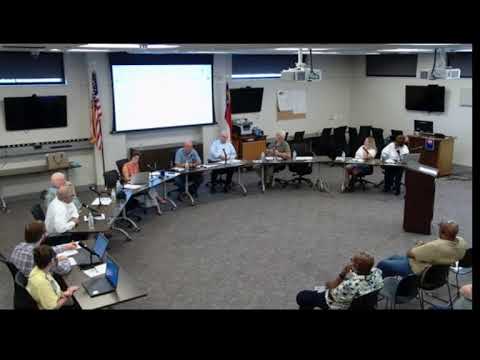
Scotland County approves amended 2026–27 budget after trimming two capital projects amid state revaluation changes
Summary
Scotland County commissioners on a June 11, 2026 reconvened meeting approved an amended fiscal 2026–27 budget by voice vote, removing two capital projects and directing $100,000 toward school tennis courts as officials warned state law (Senate Bill 889) and revaluation rules forced difficult trade-offs.
Scotland County commissioners approved an amended fiscal 2026–27 budget at a reconvened meeting June 11, 2026, voting by voice to remove two capital projects, reinstate a sales-tax allocation to the fire fund and designate $100,000 to complete school tennis courts.
The vote followed a public hearing in which resident Ronnie Nicholson urged clearer explanations of the proposed spending and warned that the county’s taxpayers face higher bills after a recent revaluation. "This is the largest budget in the history of Scotland County," Nicholson said, adding that the county manager’s office had indicated the budget contains a property-tax increase of about $2.34 million (as stated in the transcript) and that appropriation of fund balance could automatically raise tax burdens.
A county official identified in the transcript as “Miss Ne.” told the board that Senate Bill 889 requires reverting to 2025 valuation baselines even though the county paid for a new revaluation, creating a revenue shortfall that forces the board to choose between cutting projects or drawing additional fund balance. "If we stuck with a 69-cent tax rate now based on old values, we'd have a $10 million deficit," the official said in explaining the county’s position and why the board needed to adopt an amended budget before the June 30 deadline.
During discussion commissioners proposed and supported removing the county maintenance facility and a planned fuel-farm project (combined in discussion at roughly $800,000) to lower the amount needed from fund balance. Staff estimated that removing those two items would reduce the required fund-balance draw to roughly $2.1 million and bring the revised budget total to about $56.4 million; commissioners and staff described these figures as estimates that would require updated quotes and final adjustments.
School funding received focused attention. Staff said the county’s $136,000 allocation includes a 9.75-cent commitment consistent with the prior year and an additional $100,000 proposed for athletics. One commissioner urged the county to use the $100,000 to complete a delayed high-school tennis-court replacement so student-athletes can play home matches; staff noted prior full‑replacement quotes were near $100,000 and warned that firms would not sell materials only, so the county would need to re-solicit bids if it moved forward.
A motion to approve the budget with these adjustments — remove maintenance-facility funding, remove the fuel farm, designate the $100,000 above 9.75 for completion of the tennis courts with any remaining balance to the school system, and reinstate the 5% sales-tax allocation to the fire fund (fire tax rate to remain at 5 cents) — was made and seconded. The board approved the motion by voice vote; the transcript records no roll-call tally.
Commissioners repeatedly said uncertainty in Raleigh over related legislation complicates the local budget. Officials warned that if state actions require counties to re-run revaluations or otherwise change valuation rules, the county could face additional costs and future budgeting challenges.
Next steps: the board adopted the amended budget before the statutory June 30 deadline; staff will finalize numbers and procurement steps, re-quote capital projects if the board proceeds later in the year, and implement the budget as adopted unless subsequent state action requires changes.