Get Full Government Meeting Transcripts, Videos, & Alerts Forever!
Get email alerts on the Transportation topic
No spam. Unsubscribe anytime.
Residents press for neighborhood‑level traffic and sewer analyses as university master plan moves forward
Summary
Residents at the June 30 hearing urged the board to require targeted traffic studies for Norfolk Avenue, South New Street and the Rosedale intersection and to resolve sewer/water capacity questions before detailed approvals; township and university experts said those items are typically evaluated in land‑development applications but agreed to provide documentation and further analysis at later stages.
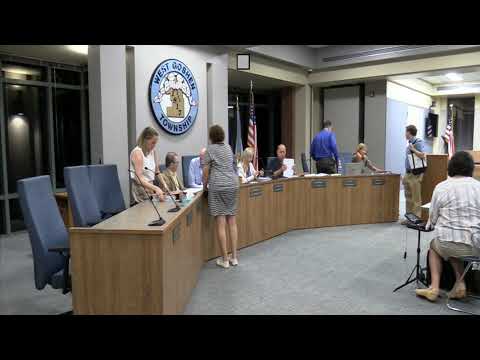
At a continuation of the West Goshen Township conditional‑use hearing on June 30, multiple residents urged supervisors to require narrow, neighborhood‑level traffic analyses and for the board to secure sewer and water capacity confirmations before approving aspects of Westchester University’s master plan.
Resident Dan Schatz told the board older studies showed major swings in traffic depending on whether school was in session and asked for a detailed study of Norfolk Avenue and nearby cut‑throughs. Another resident, Sabina Strapman, raised concerns about ingress/egress from private university parking lots and whether the township could require changes on private property. Several speakers also described past construction noise from geothermal well installations and requested advance notification and noise mitigation plans.
Township and university experts said the master plan’s transportation and parking studies follow standard planning‑level practice but that more detailed, site‑specific traffic impact statements will be required at the land‑development stage. "When a specific application comes online, we'll know a lot more about how it's actually functioning and we can really drill down," said Guy D. Martino of Traffic Planning & Design, who testified that his 25‑intersection study projects level‑of‑service C or better under planning assumptions.
Planner Danielle Bayer noted the master plan is conceptual in many respects and that precise sewer and water calculations, buffer widths and stormwater engineering are typically demonstrated later when building footprints and exact bed counts are known: "At this planning level you're not going to get into the nitty‑gritty until the land‑development process," she testified.
Township traffic reviewer Paul Archable agreed the evaluation was appropriate at the master‑plan tier but said targeted neighborhood analyses should be scoped and performed when projects that could affect those streets proceed.
The supervisors did not take final action on the master plan and continued the hearing to Monday, Aug. 24, 2026 at 6 p.m. for remaining witnesses and any additional party evidence.