Get Full Government Meeting Transcripts, Videos, & Alerts Forever!
Get email alerts on the Property Tax Amendment topic
No spam. Unsubscribe anytime.
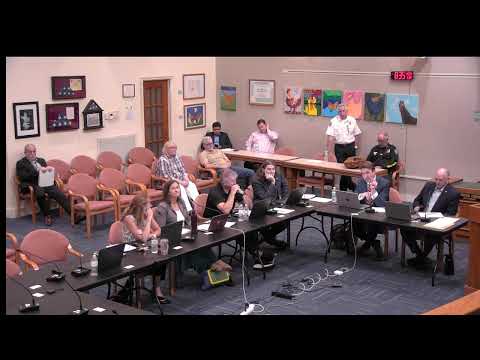
Council hears county appraisal office brief on homestead‑exemption amendment and warns of a $5M–$9M local hit
Summary
Seminole County property appraiser David Johnson briefed Ovito council on the November constitutional amendment (HJR1F/“Amendment Three”) that raises the homestead exemption to $150k (2027) and $250k (2028) and lowers the non‑homestead assessment cap; staff estimated a roughly $5.1 million general‑fund loss in year one and $9.2 million in year two for the city under current values.
David Johnson, Seminole County property appraiser, told the Ovito City Council work session that a constitutional amendment heading to the November ballot—now being called Amendment Three after passage as HJR1F—would increase the homestead exemption to $150,000 on Jan. 1, 2027 and to $250,000 on Jan. 1, 2028. The ballot title Johnson read at the meeting was “Save our homes from excessive property taxes,” which he said is already the subject of a legal challenge over prejudicial wording.
Johnson said the amendment also directs the legislature to adopt a schedule, by general law, that could ultimately eliminate property taxes for homesteads. "It does not eliminate property taxes in totality for homesteaded properties," he added, noting school millage is unaffected by this measure and remains under separate state funding rules. He warned that only a statewide 60% yes vote would make the constitutional change effective.
Why it matters locally: Johnson used Ovito numbers to show scale. The city’s certified ad valorem roll is about $4.78 billion across roughly 14,315 parcels, he said; roughly 9,500 parcels are homesteaded, producing about $14 million — approximately 51% — of the city’s ad valorem revenue. Under the staff scenarios presented, moving to a $150,000 exemption would reduce Ovito’s general‑fund revenue by about $5.1 million in the first year; if the exemption grows to $250,000 the following year, the annual loss could reach about $9.2 million, yielding an illustrative two‑year impact on city receipts of about $15 million assuming no growth in the tax roll.
Staff clarifications and assumptions: City staff and the property appraiser emphasized that these estimates assume no new construction or value growth; the actual effect will depend on how taxable values evolve and any actions the council takes on millage or fees. Miss Jones, the city’s finance director, noted that one of the amendment’s provisions would index the $250,000 exemption to CPI, and that the amendment also reduces the assessment cap on non‑homestead property from 10% to 5%.
Legal and procedural implications: Separately, staff flagged CS/SB4F — a legislative change to how maximum millage rates are computed — which removes a personal‑income adjustment used to calculate the majority‑vote cap and makes it harder to approve millage increases above the rollback. The combined effect, staff said, could force municipal councils to choose among raising non‑homestead millage, imposing non‑ad valorem assessments, cutting services, or using other revenue replacements. Johnson said his office will provide factual educational materials (trim notices and a factsheet) but warned that constitutional officers may not use office resources to advocate for or against the amendment.
Council response and next steps: Councillors asked detailed questions about how the rollback/rollup math works and who would ultimately bear higher rates if the roll remains constrained. Council members and staff discussed voter education, calculators and the political landscape; several members urged staff to study a range of revenue‑replacement options and report back. On direction from council, staff will proceed with technical analyses of likely options, including potential non‑ad valorem mechanisms and targeted fees, and will coordinate public information that explains the amendment’s local impact.
What’s next: If the amendment passes, staff said the council will need to make choices for the FY2027–28 budget cycle and beyond. The council asked staff to return with scenarios that show the combined effects of indexation, rollback changes and potential revenue replacements so voters and elected officials can assess tradeoffs ahead of final budget decisions.