Get Full Government Meeting Transcripts, Videos, & Alerts Forever!
Get email alerts on the Healthcare Finance topic
No spam. Unsubscribe anytime.
CMS Administrator Mehmet Oz warns of short Medicare trust fund runway, cites obesity and fraud as cost drivers
Summary
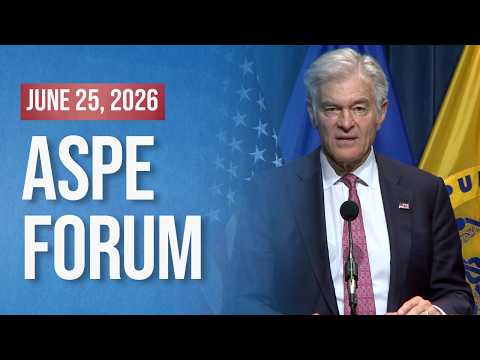
At ASPE's inaugural Health Economics and Policy Forum, CMS Administrator Mehmet Oz said the Medicare trust funds have "about five and a half years of runway," pointed to obesity, procedural volume and fraud as major cost drivers, and urged supply-side reforms to expand provider capacity and quality.
Mehmet Oz, Administrator of the Centers for Medicare & Medicaid Services, opened ASPE's inaugural Health Economics and Policy Forum by urging attention to the sources of rising federal health spending and the supply-side levers that can address them. "We've got about five and a half years of runway to address the problems that we face," Oz said, citing the Medicare trustees' projections as an urgent fiscal signal.
Oz framed obesity and related chronic illnesses as principal drivers of health costs and said new GLP‑1 medications are beginning to reduce those trends. "Seventy percent of healthcare costs are tied to obesity and related challenges," he said, noting that the recent diffusion of GLP‑1 drugs has started to bend the trajectory downward.
Oz also raised fraud, waste and abuse as a continuing fiscal threat, saying the COVID period taught fraudsters that money could be taken from federal programs with insufficient detection. "During Covid, we actually taught an entire generation of fraudsters that you could take money from the federal government and not get caught," he said, urging program designs that reduce exploitability while preserving access and innovation.
On supply and quality, Oz criticized payment differences that reward hospitals more than independent clinicians for the same services, saying site-specific payment rules have encouraged consolidation. "If the hospital gets paid five times more than the doctor for the same task… the hospital just bought the doctors," he said, warning that such incentives can change the culture and reduce competition.
Oz pointed to recent federal investments in rural care as an example of supply-side stimulus, noting a $50 billion initiative intended to increase capacity and alter delivery models. He also raised work requirements in Medicaid as a policy the administration views as promoting participation: he described an analysis that an additional year of work could yield large macroeconomic benefits.
Oz closed by highlighting drug-pricing actions that seek to harness market leverage and lower U.S. prices; he said the administration's approach has the potential to reduce costs while retaining incentives for innovation. He then introduced Casey Mulligan to speak on supply-side health economics.
The forum moved into remarks from Mulligan and a Q&A with pharmacists, researchers and other participants.