Get Full Government Meeting Transcripts, Videos, & Alerts Forever!
Get email alerts on the Tax Collection topic
No spam. Unsubscribe anytime.
Port Richey approves interlocal agreements to collect non-ad valorem assessments and clears consent agenda
Summary
Council approved interlocal agreements with the Pasco County Property Appraiser and Tax Collector to collect non-ad valorem assessments on the tax roll, approved the consent agenda and adjourned; discussion flagged a one-time $700 setup fee and ongoing percentage administrative charges with the tax collector agreement.
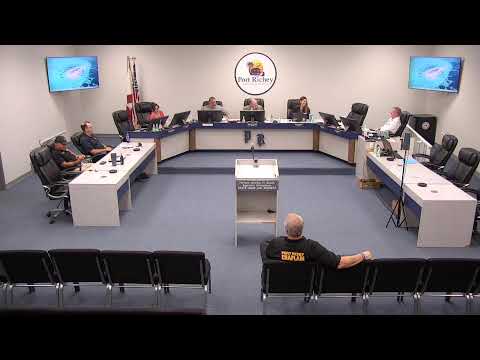
On June 23 the Port Richey City Council approved interlocal agreements with Pasco County agencies to use Florida's uniform method for collecting non-ad valorem assessments and special assessments on the tax roll.
Council first approved the interlocal agreement with the Pasco County Property Appraiser, authorizing the appraiser’s office to provide notices and establish the framework for administration and collection of unpaid code-enforcement fines and other municipal liens pursuant to Florida Statutes §§197.3631–197.3632.
Council then approved a companion agreement with the Pasco County Tax Collector to collect and enforce the city’s non-ad valorem assessments. Staff and council questioned administrative fees and setup costs: the transcript documents a one-time, nonrefundable setup fee quoted at $700 and references ongoing administrative percentage charges the tax collector will retain. Staff said the term runs through Dec. 31, 2027, with automatic one-year renewals unless terminated by either party, and emphasized the city requested additional information about potential printing or data-merge costs if county systems cannot merge city data.
Earlier in the meeting the council approved the June 23 consent agenda without separate public comment. The meeting concluded with a motion to adjourn, which carried on a voice vote.
Why it matters: The interlocal agreements allow the city to place unpaid code-enforcement liens and other special assessments on the property tax roll for collection, potentially improving collection rates but also creating new administrative costs that staff said they are clarifying with county partners.
Next steps: Staff will follow up with the county offices to clarify fee and data-merge costs and will prepare the list of assessments and notices needed to put items on the tax roll for the upcoming tax cycle.