Get Full Government Meeting Transcripts, Videos, & Alerts Forever!
Get email alerts on the Water Resources topic
No spam. Unsubscribe anytime.
County staff to seek quotes for multi-level water study after committee discussion
Summary
LaSalle County staff briefed the Land Use Committee on past groundwater/surface-water studies and recommended seeking quotes for either targeted short studies ($30,000–$50,000) or a longer multi-year study (historical examples $250,000–$500,000); the committee directed staff to get ballpark numbers to include in next year’s budget.
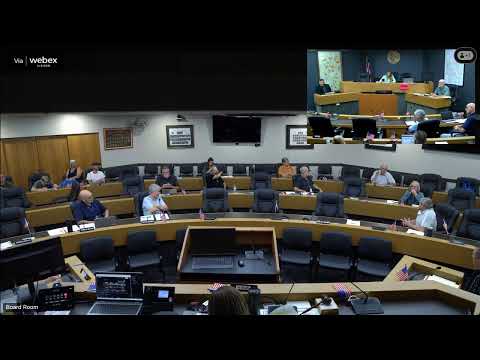
LaSalle County Land Use staff told the committee on July 1 that the county needs better local water data to inform its comprehensive plan and to evaluate the impact of potential large water users.
Land Use Director Brian Giff summarized prior work — noting a 2016 USGS hydrologic study and a 2014 groundwater projection that extended to 2060 — and said the Illinois State Water Survey specializes in groundwater work while the U.S. Geological Survey is the state partner for surface-water analysis. He told members an in-depth King County study took about three years and cost roughly $250,000–$500,000, and that a more targeted, project-specific study could cost about $30,000–$50,000 and be completed in three to five months.
Committee member Dave Torres and other members urged using updated water information to guide the county’s next comprehensive-plan update (targeted around 2030) and discussed whether LaSalle could coordinate with neighboring counties that share aquifers. Torres said a narrower, project-driven study would be cheaper and more actionable if aimed at a specific development proposal.
Members directed staff to request a basic outline and ballpark cost figures, including a long-term multiyear package and a shorter targeted option, so the county can consider a budget line for the next fiscal year. Giff agreed to seek proposals and provide estimates, and staff noted grant opportunities may exist though funding currently appears limited.
The committee did not commit funds at the meeting; next steps are for staff to return with proposals and cost estimates for committee consideration at upcoming budget discussions.