Get Full Government Meeting Transcripts, Videos, & Alerts Forever!
Get email alerts on the Humanitarian topic
No spam. Unsubscribe anytime.
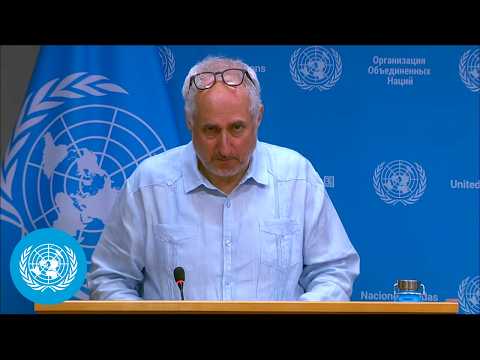
U.N. briefing: mixed humanitarian updates from Lebanon to Venezuela, Gaza and Sudan
Summary
U.N. briefers reported roughly 40% of more than 1 million displaced people in Lebanon have returned home, ongoing civilian harm in Sudan and Gaza (196 verified killed between Oct. 10 and April), restored wastewater pumping in Gaza City, earthquake response in Venezuela, strikes in Ukraine, and an attack injuring three Zambian peacekeepers in the Central African Republic.
U.N. briefers provided a broad humanitarian update, citing progress and ongoing crises across several regions.
Lebanon and southern Lebanon: According to authorities and the International Organization for Migration, roughly 40% of more than 1 million people displaced by conflict in Lebanon have returned to their home areas, the briefing said, while stressing returns must be voluntary, safe and dignified and that humanitarian access must be granted to those who need assistance. The World Food Programme and partners also delivered assistance to hard-to-reach areas in southern Lebanon.
Sudan and El Obeid: Human rights colleagues continue to document drone strikes in El Obeid that have caused civilian casualties and damage to civilian infrastructure, including schools and sites hosting internally displaced people; the Human Rights Council will hold an urgent meeting on Friday and the High Commissioner Volker Turk is scheduled to deliver a statement.
Gaza and the occupied Palestinian territory: OCHA and human-rights colleagues warned that continuing expansion of areas under Israeli control since the ceasefire last October is intensifying risks to civilians and constraining humanitarian efforts. The briefing said human-rights colleagues had verified 196 people killed between Oct. 10 and April, including 18 women and 43 children, and reiterated the need for safe, unimpeded humanitarian access. UNICEF and partners temporarily restored wastewater infrastructure serving Gaza City, enabling pumping to resume after roughly two years.
East Jerusalem: The briefing said Deputy Special Coordinator Ramiz Alakbarov led a field visit and noted that so far in 2026 about 360 people have been displaced and over 150 structures demolished in East Jerusalem.
Venezuela earthquake response: OCHA described scaled-up assistance for search-and-rescue and relief in La Guaira, with WFP providing ready-to-eat rations and some 53 urban search-and-rescue teams from 29 countries supporting national authorities as the response shifts toward broader relief and recovery activities.
Ukraine: OCHA reported that strikes from June 26 through the morning of the briefing killed and injured several civilians, including children, in Dnipro, Zaporizhzhia and Kharkiv regions, and that humanitarian partners provided first aid, psychological support and basic supplies.
Attacks on peacekeepers and detainees: The briefing said an armed group attacked near Am Dafok on the border with Sudan, injuring three Zambian peacekeepers (one seriously) who were airlifted to medical facilities; attacks against peacekeepers may constitute war crimes under international law. On Yemen, the briefing said there are ongoing discussions and a designated U.N. point person engaging with the Houthis (Ansarullah) to seek the release of detained national staff; the briefing confirmed those detained are primarily national staff.
Questions about UNRWA and accountability: A reporter quoted a U.S. ambassador as saying continued funding of UNRWA meant funding a system allegedly infiltrated by Hamas. The briefing replied that U.N. leadership had taken actions when presented with facts in specific cases and emphasized UNRWA operates under a General Assembly mandate and forms part of the U.N. humanitarian response in Gaza; the briefing also said the U.N. cooperates with national investigations as a principle but declined to comment on requests to waive immunity.
Next steps: the Human Rights Council will meet urgently on Friday on Sudan/El Obeid issues; humanitarian partners are preparing transitions from search-and-rescue to recovery in earthquake-affected areas; and the U.N. continues to press member states and parties to conflicts to ensure safe and unimpeded humanitarian access.