Get Full Government Meeting Transcripts, Videos, & Alerts Forever!
Get email alerts on the Ai Governance topic
No spam. Unsubscribe anytime.
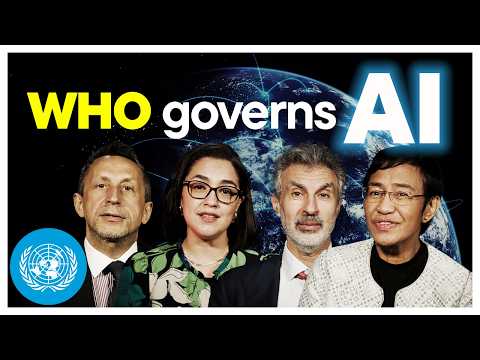
Presenter at United Nations Global Dialogue urges multilateral AI governance to manage risks and share benefits
Summary
At the United Nations Global Dialogue on AI, a presenter urged Member States to adopt multilateral governance, stressed the need for an independent scientific baseline, warned of disinformation and concentrated developer power, and highlighted the risk that developing countries be left behind.
A presenter at the United Nations Global Dialogue on Artificial Intelligence urged Member States to pursue multilateral governance to steer AI's benefits "so that they are shared by everyone." The speaker framed the gathering as the first global UN platform to discuss AI governance and called for inclusive, action‑oriented steps.
The presenter opened by defining AI and stressing its dual nature: "AI is a tool," they said, adding it "could be a tool used for the benefit of people" but warned that "if it will be in bad hands, it could also be used for coercive purposes, to erode trust, undermine democratic structures, and it could be used for propaganda and against information integrity." The remarks linked early AI use in social media to the faster spread of falsehoods and cautioned that generative systems and chatbots now move the dynamic beyond attention metrics toward "capturing intimacy."
Highlighting unequal global capacities, the presenter said the "AI divide is real," noting some countries have strong infrastructure, skills and research while others struggle with connectivity and public infrastructure. The speaker asserted that "All the frontier developers are basically concentrated in two countries," and stressed developing countries' fear of being left behind.
The address described the AI Global Dialogue as "an independent international scientific panel on artificial intelligence," emphasizing independence from national or corporate positions: "We don't speak for our countries. We don't speak for our companies. We speak for our expertise," the presenter said, framing the panel's role as establishing a factual baseline for policy. The presenter also criticized the lack of adequate national and international governance tools and urged the Dialogue to be "more action oriented and forward looking."
The speech closed with a call for multilateral action and a direct challenge to governments: "Not one country can actually deal with this technology on its own," the presenter said. "Now the question is, will the Member States move?" The address positioned the United Nations as the institution capable of convening that multilateral response and setting shared standards.
The Global Dialogue was presented as an early step in a longer process; the presenter repeatedly emphasized inclusivity and transparency but did not lay out specific new rules or binding commitments. No formal actions or votes were recorded in the transcript of this presentation.