Get Full Government Meeting Transcripts, Videos, & Alerts Forever!
Get email alerts on the Zoning Development topic
No spam. Unsubscribe anytime.
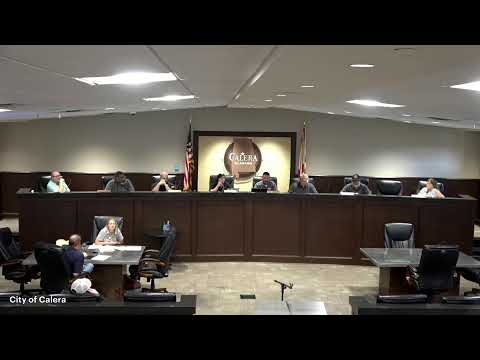
Calera planning commission debates negotiable economic-development overlay for I‑65 exit proposal
Summary
The Calera City Planning Commission discussed a request tied to a conceptual Clear Development LLC plan for the I‑65 exit that would create an economic-development "pod" with negotiable standards; commissioners voiced concerns about vague criteria, lot-size rollback and timing before a master plan or rezoning.
The Calera City Planning Commission spent the meeting examining a conceptual proposal from Clear Development LLC to apply an economic-development overlay to roughly 60–80 acres around the I‑65 exit, with members debating whether the overlay would in effect remove fixed zoning standards such as minimum lot sizes and density.
A resident who spoke during the public-comment period outlined local construction activity and the company’s interest, and later urged the commission not to assume the city has ‘‘too many rooftops’’ for attracting business. "We need all we can get," the resident said, arguing more housing would help lure major companies.
Commission discussion centered on whether to keep the city’s existing zoning code and add a separate negotiable "pod" for economic development, or to alter the existing ordinance directly. Commissioners cited Section 5.120.0 as a central concern, calling it "very vague" and warning that its six discretionary criteria could allow virtually any request to pass without clear standards.
Planning staff described the request as conceptual rather than a master plan. Staff reiterated that rezoning cannot be finalized until the developer submits a master plan and that the planning commission’s role is advisory; the city council makes the final rezoning decision. Staff also told the commission it can negotiate infrastructure and phasing requirements — for example, requiring a percentage of residential construction before commercial amenities are built — and that such conditions could be written into a master plan.
Commissioners raised legal and fairness questions about a negotiable approach: one said a separate ordinance for economic development might preserve current residential protections (including the city’s 70‑foot minimum lot standard) while creating a mechanism for larger commercial proposals; another warned that opening negotiable standards across large tracts (one member referenced some 400 acres in the limestone area) could invite requests to apply the same flexibility elsewhere.
Members discussed timing and process: the commission agreed the item should be refined before a public hearing; staff and commissioners noted the public hearing likely would occur in May and that rezoning typically requires additional meetings once a master plan is filed. A commissioner suggested a pre‑hearing work session to resolve criteria language; staff confirmed changes to the ordinance or to the commission’s recommendation can be made before the hearing is published.
Votes at a glance: The commission approved last month’s minutes by voice vote (ayes recorded; no opposition noted). The meeting adjourned after a voice vote.
What’s next: The commission will continue refining the proposed overlay language, consider whether to craft a standalone economic-development ordinance, and schedule a public hearing to solicit formal public comment before making a recommendation to the Calera City Council.