Get Full Government Meeting Transcripts, Videos, & Alerts Forever!
Get email alerts on the Traffic Safety topic
No spam. Unsubscribe anytime.
Residents urge action on speeding and child-safety on Bonavville Drive
Summary
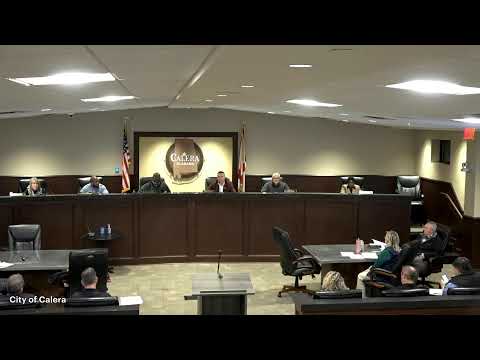
Residents told the Calera City Council repeated speeding on Bonavville Drive has caused near-misses, injured pets and pervasive safety fears; police cited 33 officer encounters since Oct. 15 but said resource limits constrain enforcement. Council and staff pledged follow-up with county and zoning.
Residents from the Ridgerest and Bonavville neighborhoods told the Calera City Council that repeated high-speed driving is creating an urgent public-safety hazard, especially for children walking to bus stops.
"People are going 30, 35 miles per hour through curves where children wait for the bus," said Cara Johns, who said the speeds make walking or cycling unsafe for families in her subdivision. Riley Petrick said she was once nearly struck while escorting a small child to a bus stop.
Multiple speakers asked the council to install traffic-calming measures — speed bumps, stop signs, or, in some cases, closing portions of Shaunda/Shonda Lane. Council and staff clarified the city controls only a small portion of Shaunda/Shonda Lane inside Shiloh Creek; the county owns or maintains the remainder, so any full closure would require county cooperation.
Police provided enforcement data: "Since Oct. 15 we've had 20 responses to Bonavville and 13 traffic stops — 33 officer encounters," the police chief said, noting the department covers roughly 80 square miles and must balance calls across the jurisdiction. The chief also explained a speed-trailer was temporarily moved for a criminal investigation and was later redeployed.
Council members said they take the complaints seriously and will follow up. Staff agreed to evaluate short-term measures (signage and additional patrols) and to coordinate with county officials on any changes that require county authority.
Next steps: staff will meet with residents after the meeting to identify feasible short-term measures and will report back at a future session.