Get Full Government Meeting Transcripts, Videos, & Alerts Forever!
Get email alerts on the Career Technical Education topic
No spam. Unsubscribe anytime.
Students showcase communication board; FFA students and instructors highlight wins and facility needs
Summary
Junior-high students presented a communication board designed to help nonverbal students communicate; FFA students were recognized for state awards, instructors detailed curriculum pathways and competitions, and staff requested urgent barn electrical repairs and continued district support.
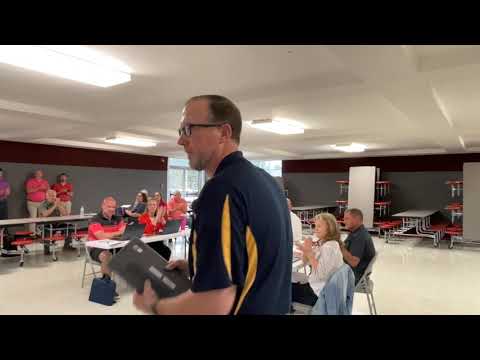
A group of junior-high students—who introduced themselves as Jacob, Kevin B., Jackie Lopez, Kayen and Angel—presented a student-designed communication board created to help peers who are nonverbal express needs and feelings during playground time and other activities. The students described meetings with district staff and said they incorporated feedback from "Courtney and her department." After the presentation, the board asked where the boards would be installed; students and staff named the elementary school, MD Williams and Head Start as immediate locations.
Courtney (program staff) explained why the tool matters, saying some elementary students are not yet verbal and use pictures, signs and digital systems (the presenter referenced the LAMP digital program). "This gives them a way while we're on the playground to communicate with staff, teachers, their peers to let us know what they need," Courtney said.
Later in the agenda, FFA students and instructors were recognized for receiving state agriculture awards and for agriscience accomplishments. Presenters described the local agriculture education model—classroom instruction, supervised agriculture experience and FFA leadership—and the two main program pathways offered locally (animal science and an agriculture/technical 'ag power' pathway that includes shop rotations). Instructors highlighted competition results (district/state placements), new program elements such as precision agriculture (GPS and automation), a first-year trap team and plans to add species (goats) to the livestock program. They also described the chapter's major community fundraiser—the district's 38th annual farm sale—which generated nearly $300,000 in gross receipts this year.
FFA instructors asked the board for immediate facility help: the barn currently has only four working electrical plugs out of 16 and needs rewiring to avoid heat‑related animal risk; quotes have been submitted to the district. Instructors also requested assistance for staffing at state events (so a single teacher is not responsible for simultaneous competitions), and suggested future program expansions such as plant science or elementary agriculture outreach. The board acknowledged the requests and noted they will consider facility and staffing support as part of future budget and capital discussions.