Get Full Government Meeting Transcripts, Videos, & Alerts Forever!
Get email alerts on the Nissan Stadium Audit topic
No spam. Unsubscribe anytime.
Interim audit of Nissan Stadium finds documentation gaps but no high‑risk construction issues
Summary
Baker Tilly’s interim audit of the Nissan Stadium construction found one medium‑risk observation on quality‑management documentation and two low‑risk issues (payment‑application supporting documents timing and delayed DBE confirmations); auditors recommended process standardization and architect access to the quality system.
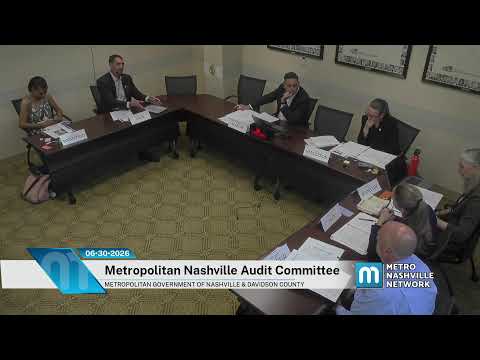
Baker Tilly presented an interim construction audit of the Nissan Stadium project to the Metropolitan Audit Committee, reporting generally positive results with no high‑risk findings.
Erica (Bridal) Hightower, principal overseeing the audit, said the work covered April 26, 2023, through July 31, 2025, and focused on governance and oversight, schedule and delivery management, financial management and reporting, procurement, and design/construction compliance.
The team identified one medium‑risk observation: inconsistency in documenting nonconforming conditions between architects and the construction manager, which made a one‑for‑one audit trail difficult. Baker Tilly recommended establishing a single definition of "nonconforming," ensuring the architect can enter items directly into the quality‑management system and that the project team standardize how those items are tracked and resolved.
Two low‑risk observations focused on (1) payment application packages that occasionally omitted required supporting documents (usually delivered within about five days) and (2) delays in receiving subcontractor confirmation for Disadvantaged Business Enterprise (DBE) participation reporting, which tends to understate participation rather than overstate it. The project team implemented a payment‑application checklist and reinforced follow‑up procedures for DBE confirmation; Baker Tilly described these as reasonable remediation steps.
"We did not identify any high risk observations," Hightower said, adding that the issues were primarily documentation and timing rather than contract or construction deficiencies.
Committee members pressed for examples of nonconforming conditions and for assurances that structural issues would be escalated to engineers; the construction manager representative, John Grubles with Tennessee Builders Alliance, explained that structural anchor‑bolt misplacement would require engineers’ involvement while cosmetic issues are treated differently.
Next steps: auditors expect multiple interim audits across the project life cycle (initial interim, pre‑completion and post‑completion). Committee discussion focused on verifying implementation of Baker Tilly’s recommended documentation practices and scheduling follow‑up interim audits.