Get Full Government Meeting Transcripts, Videos, & Alerts Forever!
Get email alerts on the Opioid Settlement topic
No spam. Unsubscribe anytime.
Audit finds weak payroll documentation and governance gaps in opioid settlement program
Summary
A Metro audit found spending aligned with the opioid steering committee's recommendations but flagged a high‑risk payroll‑allocation issue and limited formal oversight; auditors recommended stronger documentation and an advisory committee for reporting.
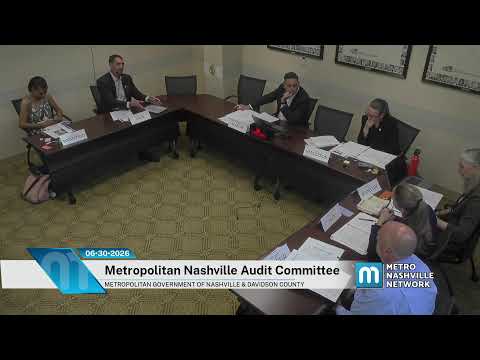
Auditors told the Metropolitan Audit Committee that spending of opioid settlement funds generally follows the steering committee’s recommendations, but they identified a high‑risk payroll allocation issue and gaps in governance that merit further action.
"About $1,500,000 of the settlement funds spent during the audit period were for payroll," Seth Hatfield, principal quality‑assurance auditor, told the committee. He said auditors reached out to roughly 34 employees whose pay was charged to settlement funds and found inconsistent, and in some cases edited, percentage‑allocations of time that led to a scope limitation on relying on that work for payroll testing.
The audit covered March 1, 2022, through May 2025 and included three objectives: compliance with allowable uses, alignment with the opioid steering‑committee framework, and the adequacy of performance measures and oversight. Auditors concluded spending aligned broadly with the steering committee’s proposal and most recommendations were either implemented or in process, but they listed five observations overall.
The primary concerns were (1) payroll allocations lacking contemporaneous supporting documentation that would allow independent verification of staff time charged to settlement funds and (2) weak formal governance and public reporting: auditors found the Board of Health mentioned opioid settlement activities only once during the audit period, and few jurisdictions the team surveyed reported a standing oversight committee for opioid funds.
Erin Evans, a Metro Council member who spoke during public comment, said the audit’s findings show a ‘‘rejection of the word oversight’’ and urged the committee to press for clearer governance and follow‑up on payroll allocations.
Health department staff told the committee they already track opioid data extensively and are moving toward digital, interactive reporting. A department official said some of the program’s early design and contracting decisions reflected steering‑committee direction and that the department has since curtailed internal hiring paid from the fund while prioritizing community contractors.
Auditors recommended: requiring contemporaneous supporting documentation for payroll allocations charged to settlement funds, establishing a formal advisory or reporting mechanism with the mayor’s office for ongoing governance and transparency, strengthening invoice review and reconciliation procedures, and instituting QA on reports before submission to the state. Management accepted five of six recommendations; the suggested formal process for tracking outcomes and analysis of performance measures was declined by management.
Next steps: auditors recommended the committee track implementation of payroll‑allocation documentation requirements and the creation of an advisory reporting structure. The committee discussed regular updates and possible advisory mechanisms; no formal committee action on the audit findings was recorded beyond discussion.