Get Full Government Meeting Transcripts, Videos, & Alerts Forever!
Get email alerts on the Technology Policy topic
No spam. Unsubscribe anytime.
Methuen committee tightens social media rules, requires district‑approved platforms for student contact
Summary
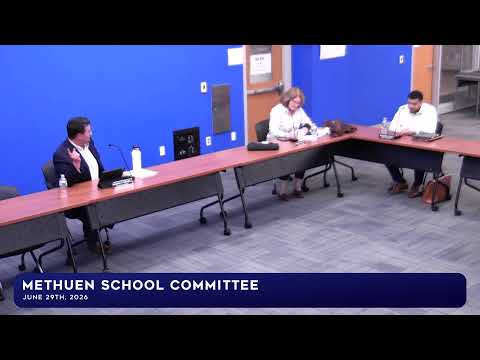
During a lengthy policy review on June 29 the Methuen School Committee amended social media and technology policies to require that electronic contacts with students be conducted through district-approved communication platforms except in emergencies; members debated enforcement, student tagging, and AI and asked the PR consultant and DESE for further guidance.
The Methuen School Committee approved an amendment on June 29 that requires electronic contacts between staff and students to use district-approved communication platforms and systems, with emergency exceptions. The change was the result of extended debate about enforcement and the limits of faculty use of personal social media.
Committee members described recent incidents in which staff or ad hoc groups used personal accounts or third-party apps to communicate with students and families. Member Donovan proposed language that became the approved amendment: "All electronic contacts with students should be through the district's approved platforms and communication systems except for emergency situations." After lengthy discussion about enforcement and what would count as a permitted platform, the committee approved the amendment by roll call.
The superintendent described a district plan to adopt a vetted app for athletic teams, band and extracurricular groups that would give coaches and advisers a supervised channel for communications. The district’s PR consultant, recommended during the meeting, will be asked to advise on official district accounts and guidance for student-run pages so parents and the public can distinguish official district channels from informal student accounts.
Members also raised concerns about staff profiting from sales to students and whether district policy should include explicit language about referrals to law enforcement or to the Department of Children and Families when allegations of sexual misconduct arise. The subcommittee and superintendent agreed that procedures (not the policy text) will specify referrals and that administrative procedure will guide implementation.
Committee members flagged artificial intelligence as an emerging issue for classroom instruction and social media; the superintendent said the district has contracted a DESE‑approved consultant to provide AI guidance starting with leadership training in August and to develop year-long staff supports.
The policy changes approved or amended on June 29 will be incorporated into a clean package by the subcommittee for a future formal vote; the committee also asked for an approved‑platform list and recommended consultant input to align policy and practice.