Get Full Government Meeting Transcripts, Videos, & Alerts Forever!
Get email alerts on the Budget topic
No spam. Unsubscribe anytime.
RSU 18 approves fiscal 2026–27 budget after votes on appropriations, special-education and technology items
Summary
Voters at the RSU 18 regional budget meeting approved the district's fiscal 2026–27 budget and related warrant articles after discussion about enrollment, a jump in special-education students, a recurring technology lease, and traffic concerns at the Williams building. Key warrant votes were recorded by hand or written ballot.
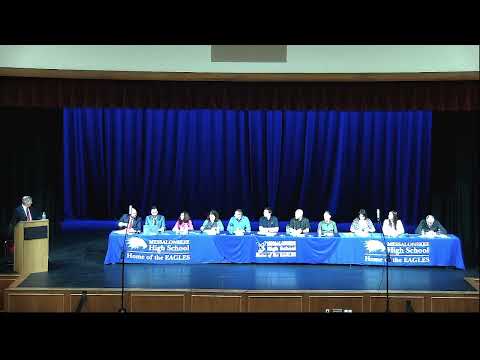
At a regional budget meeting, RSU 18 voters approved the school board's recommended fiscal 2026–27 budget and a series of warrant articles after discussion of enrollment trends, rising special-education needs, the district's technology lease, and traffic congestion at the Williams building.
Jim Ezrell, who was elected moderator and presided over the meeting, opened proceedings and explained voting procedures (hand counts or written ballots were used for several articles). When board officials read Article 1 and the proposed regular-instruction appropriation, a board member asked for current enrollments by school. District staff provided the October 1 child count: Atwood Primary (199), Belgrade Central School (225), China Primary School (241), James Bean School (308), Williams Elementary School (205), China Middle School (182), Messilonsky Middle School (529) and Messilonsky High School (number not read aloud in the transcript), for a reported total student population of about 2,554.
A substantive exchange on Article 2 addressed why special-education spending rose. "We count the special-ed students from Erskin, but we don't count the regular students from Erskin because I still provide services to them," said Cheryl Mercy, identified in the meeting as the district's special-education director, and she noted a larger incoming cohort with IEPs: "This year we have 40 kids coming in that already have an IEP in kindergarten." Mercy explained that two special-purpose private schools and changes in how placements are counted contributed to the increase in the special-education line.
During discussion of facilities (Article 9), a resident described severe morning and afternoon traffic congestion at the Williams building and asked whether a prior traffic study had been followed. The moderator acknowledged past traffic adjustments (additional traffic control personnel and a bus-route change) but said he would locate and share the prior study: "I will find the study and take a look at it and when I do I will share it with you.", the moderator said. The resident characterized the condition as "horrendous" during drop-off and pick-up times.
Board members also questioned payroll lines under system and school administration (Articles 6 and 7). One member asked whether assistant-superintendent pay had increased; staff clarified that the superintendent's and assistant superintendent's salaries "stay the same" in the proposed budget.
Article 13 prompted discussion about the district's technology funding approach. A board member asked why $500,000 (described at the meeting) appeared in the explanation; staff said this reflects a multi-year technology lease/purchase agreement used to preserve an annual device-replacement cycle and to avoid large spikes in the budget: "We use a technology lease to fund recycling our technology every year... it avoids artificial spikes in the budget," staff said.
Votes at a glance - Article 12 (appropriation under the EPS funding act and municipal assessments): hand-count vote 50 in favor, 3 opposed — adopted. - Article 13 (additional local funds, including technology lease and a China-specific local assessment): written ballot 49 in favor, 12 opposed — adopted. - Article 14 (authorization of the full FY2026–27 school budget as read at the meeting): recorded vote 51 in favor, 4 opposed — adopted. (Other appropriation articles, such as Articles 1–11, 15 and 16, were presented and adopted by voice vote or as stated at the meeting.)
What changed and next steps The meeting record shows increased special-education counts and a district technology-leasing strategy intended to smooth replacement costs. The moderator said meeting ballots and hand counts were collected by clerks and recorded; the approved budget covers the fiscal year beginning July 1, 2026 and ending June 30, 2027. The moderator said he would follow up by locating and sharing the traffic study for the Williams building and by answering questions about salary-line detail after the meeting.
The meeting adjourned after Article 16 was adopted.