Get Full Government Meeting Transcripts, Videos, & Alerts Forever!
Get email alerts on the Work Plan topic
No spam. Unsubscribe anytime.
Mountain View performing arts committee approves 2026–27 work plan; broadens community‑connections focus
Summary
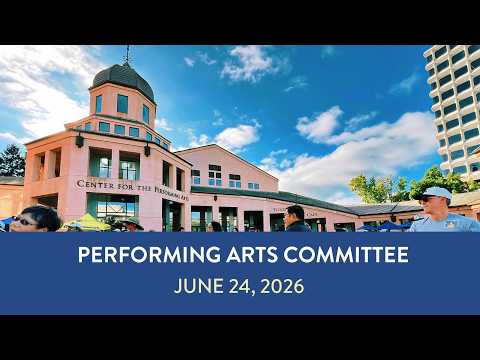
The Mountain View Performing Arts Committee approved its fiscal year 2026–27 work plan unanimously on June 24, restructuring a key item into a broader 'increase community connections' heading and adding language to gather community input, while folding a new client impact report into ongoing reporting.
The Mountain View Performing Arts Committee unanimously approved its fiscal year 2026–27 work plan at its June 24 meeting, adopting amendments that broadened an outreach goal and added a requirement to gather community input.
The vote, called after extended discussion of outreach tactics and event objectives, restructured the plan so that a single item—"increase community connections"—will serve as an umbrella with subitems for (A) participation in community/neighborhood meetings, (B) review of the Mountain View Art & Wine Festival on Castro Street, and (C) review of Make Music Day. The committee also instructed staff to fold a "new client impact" metric into the committee's quarterly impact reporting and added a separate work item for the center's 35th‑anniversary activities, tentatively scheduled for January 2027.
Why it matters: the adopted changes aim to give the committee a clearer outreach strategy (who the committee is trying to reach and why) rather than listing isolated events. Members repeatedly pressed for sharper audience definitions—whether the goal is to attract people to the center, recruit committee volunteers, or boost attendance for specific performances—and asked that any ad hoc subcommittees be given focused, measurable objectives.
During the meeting a committee member framed the problem this way: "We need a slightly more honed objective for community connections," and urged that subcommittees be given concrete deliverables. Another member noted that using existing city neighborhood meetings and larger events is intended to be a low‑effort way to build awareness without requiring the committee to stage standalone festivals.
The motion to accept the draft work plan included specific, staff‑proposed formatting changes (turning item 2 into a broad heading with 2A/2B/2C subitems), the insertion of "gather community input" language into the outreach item, and placement of the 35th‑anniversary planning as a new work item. The motion was seconded and passed unanimously.
What comes next: staff will confirm dates for neighborhood/community meetings and return to the committee in August with more specific scheduling and recommended objectives or subcommittee charges. The committee also asked staff to provide the revised quarterly impact reporting template that includes the new client impact metric.
Meeting note: the committee voted to approve the minutes from the May 20, 2026 meeting earlier in the session.