Get Full Government Meeting Transcripts, Videos, & Alerts Forever!
Get email alerts on the Humanitarian Aid topic
No spam. Unsubscribe anytime.
WFP appeals for $50 million to feed up to 500,000 people after Venezuela earthquakes
Summary
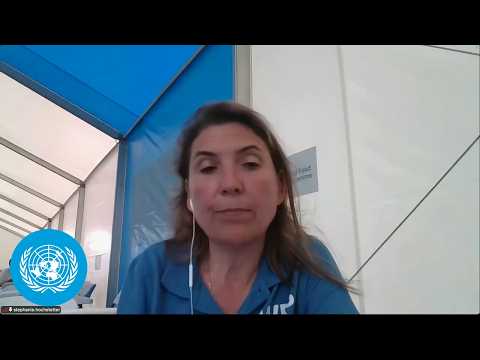
World Food Program country director Stephanie Hochstetter, reporting from La Guaira, said WFP has reached 1,200 people so far and launched an initial $50 million appeal to provide life-saving food assistance to up to 500,000 people over three months while scaling up logistics and local coordination.
Stephanie Hochstetter, World Food Program country director in Venezuela, briefed journalists from La Guaira on the agency’s emergency response after back-to-back earthquakes struck the country. "The situation here . . . is devastating," she said, describing families without shelter, food or water and field distributions already under way in temporary integrated service centers where "the government has requested the United Nations to provide support."
Hochstetter said WFP had reached 1,200 people with emergency food parcels in the first days and was "rapidly scaling up," aiming to reach up to 500,000 people sheltering in the coming three months. "Our initial appeal is of $50 million to provide life-saving food assistance up to half a million people over the next 3 months," she said, adding that plans will be reviewed as assessments refine needs and recovery operations are planned.
On stocks and logistics, Hochstetter said WFP had more than 3,000 metric tons of food in the country—"enough to feed more than 10,000 families for 2 months"—and was procuring additional supplies, including the option to reallocate stocks in neighboring Colombia. She noted that the ports of Puerto Cabello and La Guaira were operational and that partner relief items (more than 1,400 metric tons) were prepositioned at a WFP-managed depot in Panama and ready for dispatch, supporting what she called an "unmatched logistical footprint" across the hardest-hit states.
When asked about operational constraints, Hochstetter said the primary challenge was establishing and expanding delivery points quickly to reach affected people and to assess the full scale of needs. Responding to an inquiry about air access, she said, "No commercial flights are going in. Commercial flights are flying into Valencia," and that maritime routes were functioning "for humanitarian assistance only."
Hochstetter also described coordination with other humanitarian partners to provide medicines, psychosocial support, shelter, water and emergency communications at integrated centers. She said that before the crisis WFP was reaching roughly 500,000 people through school-meal programs and community interventions and that the agency had attended 1,200 people in the emergency over the past few days.
Hochstetter warned that while immediate deliveries are under way, "when the spotlight fades, the needs do not," urging sustained support and international solidarity to prevent families from becoming trapped in prolonged food insecurity. The briefing closed after journalists asked follow-up questions about targeting, budget sustainability and next steps; Hochstetter reiterated the $50 million appeal and said countries and partners were stepping up to help fill remaining gaps.