Get Full Government Meeting Transcripts, Videos, & Alerts Forever!
Get email alerts on the Licensure And Supports topic
No spam. Unsubscribe anytime.
Virginia panel details licensure options, county hiring contacts and WIOA supports for career switchers
Summary
Panelists described K–12 licensure routes (provisional licenses, special-education provisional coursework, state-approved alternative programs and career-switcher options), Fairfax recruitment contacts, and WIOA-funded workforce services to help displaced federal employees enter local education and government roles.
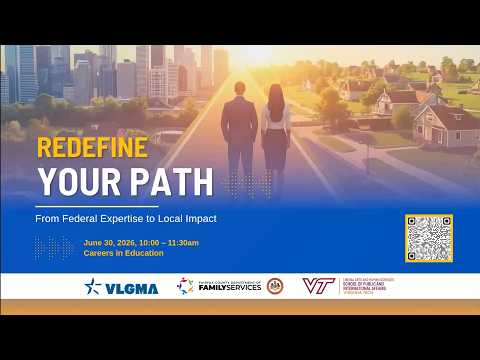
Panelists at a Virginia Local Government Management Association webinar walked jobseekers through K–12 licensure options and county workforce resources intended to speed career transitions for displaced federal employees.
Ahmed Serran, introduced as director of talent acquisition and management for Fairfax County Public Schools, reviewed licensure pathways used by Virginia school divisions. He described provisional licenses that allow candidates to begin full-time teaching while completing state requirements: "A provisional license… those are good for three years," he said, and noted that provisional routes are intended to be temporary while applicants complete Praxis content tests and other state requirements.
Panelists outlined alternative routes and supports: a special-education provisional pathway that can be completed with a roughly three-credit course; state-approved online alternative-certification programs (about $3,000 in the examples cited) that award an I‑Teach provisional credential; and a career-switcher provisional license supported by Educate Virginia and several universities. The panel repeatedly recommended candidates check the Virginia Department of Education shortage lists to identify high-need subjects and share full education records when applying so hiring teams can assess licensing readiness.
Fairfax County staff provided practical applicant contacts and application tips: applicants were advised to apply through official school-division portals and to follow up by emailing recruit@fcps.edu, which a panelist offered as the best channel for tracking application status and getting licensure guidance. Jonathan Mandina and other panelists added that many school divisions maintain specialist teams to advise prospective career switchers and sometimes offer financial or programmatic support to help employees obtain licensure while employed.
Tatiana Nuth of Fairfax County Workforce Development described county employment-center services and services funded through the Workforce Innovation and Opportunity Act (WIOA): personalized career coaching, assistance converting federal résumés to local-government formats, access to skills training and credentialing supports, paid work-based learning placements and job fairs targeted to displaced federal workers. She noted QR codes and sign-up links referenced in the webinar for WIOA information sessions and application steps.
Panelists advised practical next steps: build a teaching portfolio, pursue substitute or adjunct roles to gain classroom experience, consider alternative-certification programs and contact county workforce centers or HR email addresses provided in the session for tailored follow-up. Event organizers said a recording and a resource email with QR codes would be shared with registrants.
Authorities and program names cited during the session included the Workforce Innovation and Opportunity Act (WIOA) and the Virginia Department of Education shortage listings. Attendees were encouraged to verify program costs and timelines with county HR offices and program providers before enrollment.