Get Full Government Meeting Transcripts, Videos, & Alerts Forever!
Get email alerts on the Procurement And Funding topic
No spam. Unsubscribe anytime.
Board hears legal primer on sinking fund vs. bond rules and a new design‑build option
Summary
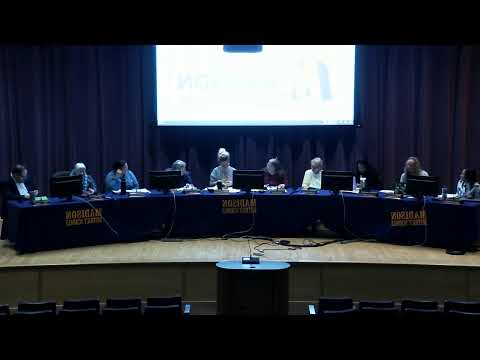
At its Feb. 3 meeting the Madison District Public Schools board heard a detailed legal briefing from the district attorney and the district’s owner’s representative on what sinking funds may pay for, bid thresholds, prevailing-wage implications and a new design‑build procurement option effective April 1.
At the Feb. 3 Madison District Public Schools Board of Education meeting the board received a legal and procurement briefing explaining key differences between bond-funded projects and sinking-fund projects and how those differences will affect upcoming facility work.
The briefing was delivered by Jeremy Moz of Clark Hill, the district’s legal counsel, and Paul (owner’s representative) from Plant Moran Realpoint. Moz told the board that, under Section 1263 of the Revised School Code, design and construction of school buildings fall under the jurisdiction of the state superintendent and that local ordinances generally do not govern the design approval process. He emphasized that plans and specifications for projects above the architect/engineer threshold (stated in the presentation as $155,000) must be prepared by a licensed architect or engineer.
Why it matters: the district is beginning to spend newly enacted sinking-fund dollars for building repairs, security and technology. Which spending stream is used determines which procurement rules, allowable expenditures and legal obligations apply — and mistakes can trigger financial penalties and loss of levy authority for the sinking fund.
Moz and the owner’s representative stepped through the procurement and statutory limits the board will face. Key points summarized from the presentation:
- Competitive bidding threshold for construction projects was stated in the briefing as $30,512 under the current state memo; projects above that threshold require statutory bid procedures (advertisement, sealed bids, posting on the state portal). Moz noted the threshold is tied to the state fiscal year and is escalated annually.
- The state is not strictly a "low-bid" jurisdiction; Michigan law requires acceptance of the lowest responsible bidder, so the board and administration must consider responsibility, references and capacity in addition to price.
- A design‑build procurement option will become available April 1 under a recently enacted change described in the presentation. Under that option the architect and contractor may be on the same team, but the district must use a separate design-criteria developer and run a competitive process specific to design‑build procurement.
- Sinking funds may be used for school security improvements, the acquisition and upgrading of instructional technology, and — under expanded rules discussed in the presentation — student-transportation vehicles (buses) and certain maintenance vehicles if they meet statutory definitions (the presenters described school-transportation vehicles as those with seating for 11 or more including the driver). Sinking funds generally may not be used for routine maintenance, furniture, or ordinary repainting of existing spaces.
- The presenters noted prevailing‑wage law changes that returned prevailing‑wage requirements to Michigan construction projects; whether those rules apply depends on funding source and timing (the presenters said some bond projects that predate the change are exempt, but sinking-fund projects are locally funded and may be treated differently).
Quotes from the briefing included Jeremy Moz saying that the Revised School Code places primary oversight of school building design at the state level and that "there are penalties" for violating bidding rules, and the owner’s representative advising boards to use professional construction managers or owners’ representatives to avoid procurement errors.
Next steps: the presentation closed with a recommendation to use the district’s facility assessment to prioritize projects, to bring designer and contractor recommendations to the board for approval, and to return with specifics once the administration and owner’s representative prepare a project list for year one of the sinking fund.
The study-session material will inform later agenda items the board voted on the same evening, including contracts and a guaranteed-maximum-price amendment for summer 2025 work.