Get Full Government Meeting Transcripts, Videos, & Alerts Forever!
Get email alerts on the Short Term Rentals topic
No spam. Unsubscribe anytime.
Planning commission tables short-term rental ordinance after debate on limits and enforcement
Summary
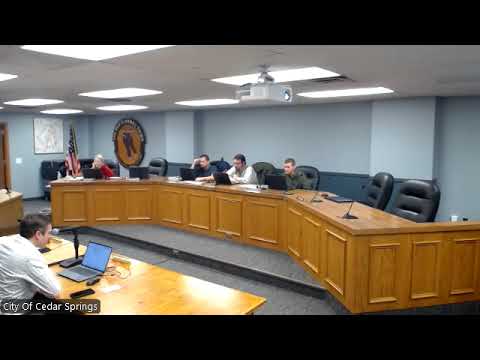
The Cedar Springs Planning Commission on April 1 debated zoning and regulatory drafts for short-term rentals — including permit caps, occupancy rules tied to the IPMC, operator requirements and revocation procedures — and voted to table the proposals for additional edits and absent-member input.
The Cedar Springs Planning Commission voted to table proposed zoning and regulatory ordinances for short-term rentals after an extended discussion about permit caps, enforcement and appeals.
Planner Mr. Moore summarized attorney-suggested changes to the drafts, saying the zoning draft clarifies "a short-term rental is recognized as a commercial use distinct from a residential use" and that parking, exterior appearance and impervious-surface language were moved from the regulatory ordinance into the zoning code. He told the commission the regulatory draft would add a new article to chapter 8 requiring permits that are "not transferable" and that the city manager would be responsible for processing and issuing permits.
Why it matters: The drafts establish the local framework for how short-term rentals will be treated in Cedar Springs — who may operate them, where they are allowed and how the city may enforce rules. The commission’s decision to delay action gives staff time to refine enforcement and appeal procedures and to include absent members in the discussion.
Key points and debate: Mr. Moore said the draft currently limits the total number of permits to five as "a trial period" to allow the city to assess demand. The city attorney raised concerns about a hard cap and suggested the commission consider a selection or lottery if applications exceed available permits; Mr. Moore said the cap could be amended later if demand increases. The draft also ties occupancy limits and advertising to the International Property Maintenance Code (IPMC), preventing owners from advertising more occupants than the code allows.
Commissioners discussed enforcement options if a short-term rental repeatedly violates codes. The draft permits revocation after two or more municipal civil infraction determinations for maintenance or condition violations; revocation would bar the property from being offered as a short-term rental for one year. Commissioners debated whether revocation decisions should require a city council hearing or whether the city manager should have discretion to revoke with appeal rights. The commission also discussed using the county sheriff for independent verification of nuisance complaints.
Financial and procedural details: The draft references civil infraction fines (the ordinance cites amounts up to $500 per confirmed infraction) and contemplates escalation for repeat violations. Commissioners asked staff to reference the fee schedule for appeal and publication costs so applicants would bear hearing-notice expenses when appropriate.
Outcome and next steps: A motion to table the short-term rental zoning and regulatory drafts until the next meeting — to incorporate attorney input and to involve absent members Chandelle and Matthew — passed by voice vote. Staff will return a revised draft to the commission next month for further consideration.
Comments in the meeting noted the approach is intended as a cautious trial rather than an immediate broad expansion of short-term rentals.