Get Full Government Meeting Transcripts, Videos, & Alerts Forever!
Get email alerts on the Food Security topic
No spam. Unsubscribe anytime.
Rockford council approves seed funding for mobile grocery after heated debate over subsidies and sources
Summary
After hours of debate and amendments, the City Council approved seed funding for a mobile grocery pilot run by Farmers Rising/Angelic Organics, cutting the original proposal and splitting costs between casino and cannabis funds; council members pressed for more private fundraising and clearer pricing plans.
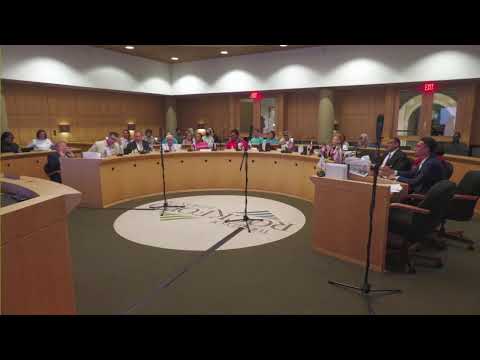
The Rockford City Council voted on June 29 to advance a mobile grocery pilot intended to bring subsidized fresh food to neighborhoods with limited access, approving a reduced funding package after several amendments and lengthy discussion. Supporters said the pilot would lower barriers to healthy food in identified food‑insecure census tracts; critics warned the model has narrow margins and urged stronger private fundraising before public dollars are committed.
Advocates framed the pilot as a public‑health intervention. "The mobile grocery store is more than a vehicle delivering food. It is a health intervention," said Kathleen Montleó, who identified herself as representing the University of Illinois College of Medicine in Rockford and the food‑insecurity task force. She urged the council to consider long‑term health savings when weighing startup costs.
Council members pushed back on several points: procurement and pricing, whether City Center Market pricing would make goods unaffordable, how much subsidy the program would require over time, and whether private partners could provide a sustainable revenue stream. "If they're not heavily subsidized, the chance of them being successful is questionable," Alderman Beach said, noting thin retail margins and the need for ongoing subsidies or large sales volumes.
The council amended the original $822,000 proposal, approving a lower total and an amendment that split $300,000 from cannabis funds and $322,000 from casino economic‑development funds. Several members said the reduced package was meant to act as seed money to encourage the organization to raise private funds and refine the pro forma. Staff cited survey data showing strong neighborhood interest—percentages in the packet indicated high willingness to shop the truck in the targeted zip codes, staff said—while members asked for clearer procurement plans so prices would be competitive with local alternatives.
Council members who supported the funding said the pilot fills a gap where larger retailers and delivery services have not yet solved access problems for many residents, especially those without reliable transportation. Opponents cautioned that the pilot alone would not replace the need for brick‑and‑mortar solutions.
The council signaled it will continue oversight of the pilot's performance metrics and fundraising progress; several members asked staff to report back on private fundraising and pricing benchmarks. The measure was placed for final passage after amendments and recorded roll calls on the council floor.
The pilot is intended to operate in targeted neighborhoods identified in the task force materials; staff said the grant includes subsidies and partnerships with local farmers and the food bank for match programs intended to amplify purchasing power.