Get Full Government Meeting Transcripts, Videos, & Alerts Forever!
Get email alerts on the Welfare Exemption Filing topic
No spam. Unsubscribe anytime.
Board backs AB 2089 to modernize welfare‑exemption filings for affordable housing
Summary
The BOE unanimously supported AB 2089, which would require earlier release of welfare‑exemption forms, authorize verified electronic signatures for county filing, and extend certain income‑threshold provisions for LIHTC properties to ease administrative burden for affordable housing providers.
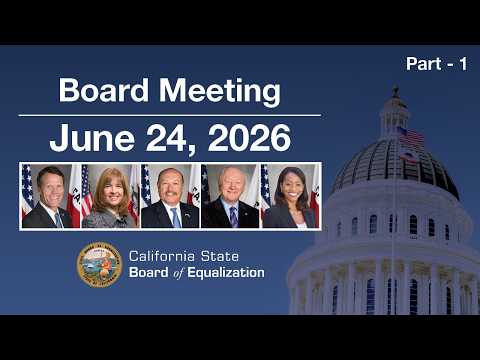
The California State Board of Equalization voted unanimously June 24 to support AB 2089, legislation that updates the welfare (charitable) property tax exemption filing process for affordable housing providers to reduce administrative burden and improve compliance.
Assembly Member Chris Ward’s staff told the board the bill would require assessors to release necessary forms by Nov. 15 each year so property managers have more time to collect tenant income affidavits and would authorize county assessors to accept verified electronic signatures. The bill also extends an existing sunset so low‑income housing tax credit properties remain eligible for the exemption when tenant incomes rise modestly, aligning multiple sunset dates to reduce administrative confusion.
Paul Schaefer, public policy manager for the California Council for Affordable Housing, said the current January–February timeline forces staff to divert substantial time from property management to collect wet signatures under a compressed deadline, and that earlier form release plus authorized electronic signatures would ease pressures on property managers and residents. “When an essential system like this becomes inefficient, the burden simply does not disappear. It shifts onto our nonprofit partners and ultimately affects the residents they serve,” he said.
Presenters noted only a small number of counties currently accept electronic signatures and that AB 2089 authorizes but does not mandate e‑submission; that approach is deliberate to avoid imposing unfunded technical burdens on smaller counties. The deputy controller and vice chair asked whether the bill is optional for counties; presenters confirmed the amendments make electronic acceptance permissive so counties without capacity are not required to implement it immediately.
Member Tony Vasquez moved that the board support AB 2089; the motion, seconded by Mr. Amran, passed on a unanimous roll call: Chair Lieber — I; Vice Chair Gaines — I; Member Vasquez — I; Member Schaefer — I; Deputy Controller Emerron — I.
BOE staff indicated the board’s support will be sent to the Legislature as AB 2089 proceeds to further committee review and fiscal consideration.