Get Full Government Meeting Transcripts, Videos, & Alerts Forever!
Get email alerts on the Data Center Ordinance topic
No spam. Unsubscribe anytime.
Honey Brook planning commission debates data center ordinance, coalesces on 75,000‑sq‑ft and 25‑MW caps
Summary
At a June 30 special meeting the Honey Brook Planning Commission reviewed a draft data‑center ordinance, heard residents’ concerns about water, noise and surveillance, and signaled support for drafting limits — including a working cap around 75,000 square feet and 25 megawatts — while directing staff to produce a recommended draft ahead of the July meeting.
Honey Brook’s Planning Commission spent its June 30 special meeting parsing a draft data‑center ordinance that commissioners and residents said must be specific if it is to protect community water, noise and farmland values. The commission and staff converged on working numeric limits — roughly 75,000 square feet and 25 megawatts — and instructed staff to prepare a recommended draft for the July planning meeting and county review.
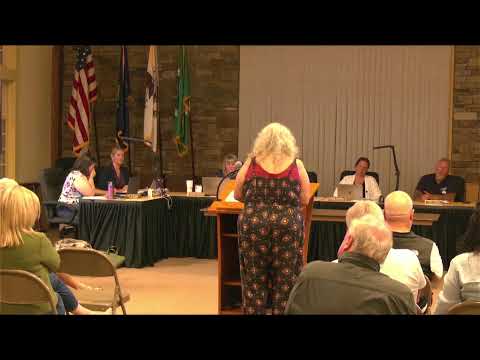
The meeting opened with public comment emphasizing local impacts. “I just ask that you guys try to be as, you know, specific as possible in order to protect Honey Brook,” resident Evelyn said, urging clear protections for the township. John McHugh, who provided a written comparison of several municipal drafts, recommended six measures including independent third‑party reviews of water, noise, thermal and environmental studies paid by applicants, annual compliance reporting, and protections for prime farmland and riparian buffers.
Why it matters: the board adopted a municipal curative amendment in May that created a 180‑day clock for the township to adopt zoning regulations addressing identified gaps. Staff told the commission that to meet county and advertising timelines the planning commission should aim to send a recommendation before the board’s August meeting so the supervisors can consider adoption in October.
Key policy points discussed
Size and power caps — preventing "hyperscale" projects. Draft examples in circulation used thresholds such as 100,000 sq ft/50 MW; commissioners debated lower caps to avoid hyperscale facilities. After extended discussion the group coalesced around drafting limits closer to 75,000 square feet and 25 megawatts as a defensible ceiling, with staff to translate that consensus into precise ordinance language. Staff noted the ordinance can pair a square‑foot cap with a power cap and that either threshold being exceeded should trigger the higher review standard.
Setbacks and sensitive receptors. Commissioners weighed setback options for large facilities (examples: 150 ft from public rights‑of‑way, 200 ft from industrial property lines, 500 ft from dwellings/schools) and discussed a 1,000‑foot minimum from "sensitive receptors" such as homes, schools and day cares. Staff advised caution: large buffers across Honey Brook’s piecemeal industrial district risk excluding all usable parcels; the commission agreed to use "minimum" setback language and asked staff to test defensibility against the township map.
Water use and cooling. Multiple commenters and commissioners flagged water withdrawals and trucking of treated effluent. The commission discussed requiring closed‑loop cooling where feasible, prohibiting trucked water, and requiring applicants to provide will‑serve letters and proof of a reliable water source at application. Staff proposed ongoing water‑use reporting (monthly or quarterly) and third‑party monitoring at the applicant’s expense.
Noise and vibration standards. Residents and experts urged seasonally based, multi‑day baseline studies and limits on low‑frequency, continuous noise. The draft includes four‑season or multi‑day measurement protocols; commissioners discussed adopting WHO or ANSI‑referenced measurement approaches and adding as‑built verification after the facility is partly occupied to ensure ongoing compliance.
Backup power, batteries and emissions. The commission favored allowing only emergency backup power on site, with strict runtime limits and fence‑line monitoring to prevent facilities from operating continuously on generators. Several speakers warned about fire risk and hazardous waste associated with large battery‑storage systems; commissioners asked staff to explore whether and how battery storage should be restricted or conditioned.
Screening, security and maintenance. Draft language calls for an 8‑foot minimum perimeter fence with screening or berming on the outside, and maintenance agreements to ensure landscape buffers remain effective (dead trees replaced, annual inspections) as part of land‑development conditions.
Decommissioning and conditional‑use requirements. The commission discussed requiring decommissioning financial guarantees, periodic review of decommissioning cost estimates, and permitting conditions that include necessary regulatory approvals (PennDOT coordination, NPDES/wastewater where applicable) before final approval.
Public concerns and monitoring. Commenters pressed for a defensible ambient noise baseline and ongoing township monitoring so future claims are measured against preexisting conditions. Others raised surveillance and carbon‑footprint worries and urged environmental and grid‑impact analysis as part of the conditional‑use review.
Next steps. Staff said they will pull the meeting notes into a revision and aim to circulate an updated draft by about July 15–16. The planning commission is scheduled to act on a recommendation at its July meeting so the board can meet county review deadlines and the curative‑amendment timeline. No formal ordinance vote was taken at the June 30 meeting.
Quotes capturing debate
“There's not to be — you don't really need to get in all this water study stuff. We already know USGS already knows what our aquifer can handle,” a public commenter said while urging restrictions on potable water use. John McHugh urged independent third‑party studies paid by applicants: “require an independent 3rd party review of water, [noise], thermal … paid for by the applicant.”
What the commission did not decide: The meeting produced clear direction but no final adoption; commissioners asked staff to draft enforceable language on caps, setbacks, water use and monitoring and return with a revised ordinance.
The planning commission will take up the revised draft at its July planning meeting, with staff aiming to forward a recommendation so the board can meet county advertising and the curative‑amendment schedule.