Get Full Government Meeting Transcripts, Videos, & Alerts Forever!
Get email alerts on the Water Quality topic
No spam. Unsubscribe anytime.
Chino Valley council defers application for PFAS wastewater funding amid cost and uncertainty
Summary
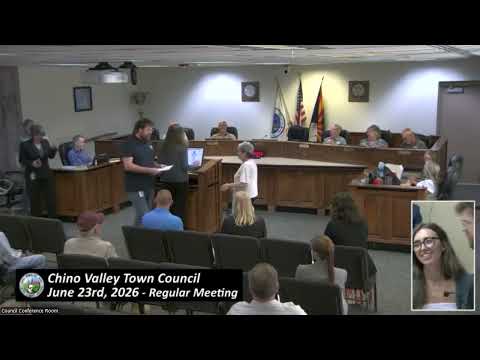
After a presentation on PFAS treatment options and financial implications, Chino Valley council voted unanimously to defer a WIFA/WHIFA funding application for a proposed PFAS remediation project at the town water reclamation facility until federal requirements are defined.
The Chino Valley Town Council voted unanimously to delay pursuing state infrastructure funding for a potential PFAS (per- and polyfluoroalkyl substances) remediation project at the town’s water reclamation facility, citing regulatory uncertainty and potentially steep costs for ratepayers.
Public works director Ryan told the council the project is at a conceptual stage and that ‘‘PFAS are a group of man-made chemicals found in many consumer and industrial products’’ that currently move through wastewater systems from residential, commercial and industrial sources. He said no engineering, pilot testing or technology selection has been completed and that federal and state treatment standards for wastewater remain uncertain.
Finance Director Katie explained the town’s preliminary planning-level estimate for a treatment project is about $10 million, but that the portion that might be forgivable through WHIFA/WIFA programs is ‘‘unknown’’ at this time. Staff warned that a $10 million loan with typical debt service could translate to roughly $24 per month in additional charges per water/wastewater customer — a 38% increase in current fees — if the town were to cover the cost primarily through utility rates. She also said the wastewater fund currently owes about $1.3 million to the general fund and is expected to face expenditures that may exceed revenue in the coming year.
Council members questioned whether limiting treatment to the drinking-water supply side would avoid the issue at the reclamation facility and pressed staff on timing, forgivable principal scenarios and the staff time required to pursue deeper WIFA applications. Staff noted that regulatory timelines have shifted (drinking-water PFAS MCLs originally set for 2029 may be extended to 2031) and that delaying evaluation could lead to higher future costs due to inflation and changing standards.
Given those uncertainties, the council approved the staff recommendation to defer the WIFA application ‘‘until regulatory compliance is federally defined and/or becomes mandatory.’’ The motion passed on a roll-call vote recorded as 7–0.
Next steps: Staff will continue monitoring federal and state regulatory developments, track WIFA funding opportunities, and recommend bringing a formal debt authorization back to council only if funding terms and regulatory requirements become clearer.