Get Full Government Meeting Transcripts, Videos, & Alerts Forever!
Get email alerts on the Wastewater topic
No spam. Unsubscribe anytime.
Voters authorize $12 million design fund for centralized wastewater phase; proponents cite state loans, opponents urge updated data
Summary
Mashby voters approved a $12 million authorization for phase 3 wastewater design to plan centralized treatment and collection systems; supporters said design funding is required to access 0% state loans and principal forgiveness, while contractors and some residents urged using 2026 data and more consideration of advanced septic alternatives.
A motion to authorize the treasurer, with select board approval, to borrow $12 million for planning and design of a centralized wastewater collection, treatment and effluent recharge system passed at the special town meeting, 263–112.
Supporters told voters the design authorization is the next necessary step to secure low-interest state financing and principal forgiveness. A presenter summarizing past phases said phase one is complete, phase two is under construction, and phase three is expected to serve more than 1,000 homes and reduce nitrogen loading in the Wquoite watershed by roughly 30 percent. The speaker said the authorization would fund detailed fieldwork, modeling and permitting needed to transform a conceptual plan into a construction-ready project and noted that voters would be asked to approve construction-level borrowing later.
Not all residents agreed that immediate design funding is the right next step. Shawn Reed, a grade 6 wastewater operator and maintenance coordinator, urged caution and recommended updated data, saying the consultant’s work relies on older inputs and that enhanced I/A (innovative/alternative) septic technologies have advanced. ‘‘A no vote tells the town to bring us a plan with 2026 data at 2026 cost,’’ Reed said, arguing some areas may be better served by newer on-site technologies at lower cost.
Town officials replied that without a final design the town cannot apply for the 0 percent loans and principal forgiveness programs that reduce taxpayer cost. Town staff also described Aqua Fund and other homeowner assistance options for residents who will need to connect to sewer or replace failed Title 5 systems, noting eligibility tiers and that not all homeowner loans are zero percent.
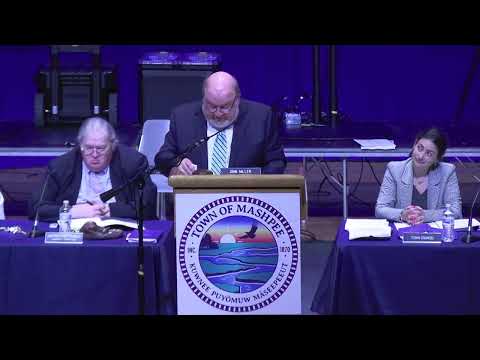
Moderator John Miller announced the result after clicker voting: the article met the two-thirds threshold and was approved, with applause from the hall. The vote advances financing for the design phase but does not itself authorize construction; any later borrowings or construction contracts will return to voters as required under state law.
The town manager and project proponents said the next steps include completing field studies, finalizing siting and easement needs, and pursuing state funding opportunities that depend on a construction-ready design.