Get Full Government Meeting Transcripts, Videos, & Alerts Forever!
Get email alerts on the Parks Element Amendments topic
No spam. Unsubscribe anytime.
North Bend commissions advance parks-element amendments, agree to seek fuller PROS study
Summary
City staff and commissioners outlined edits to the 2026 parks element intended to reflect tribal comments and align park projects with an upcoming impact-fee update; commissioners asked for clearer citations, editorial fixes and a future parks, recreation and open-space (PROS) plan to re-evaluate level-of-service standards such as the pool metric.
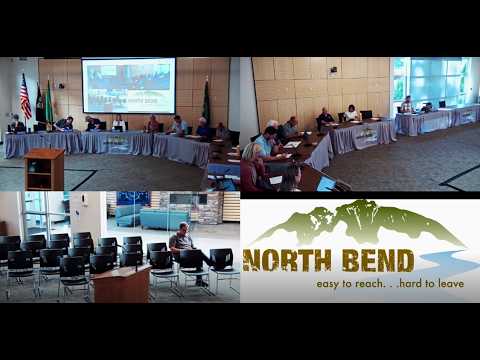
City staff introduced proposed amendments to North Bend’s 2026 parks element during a joint meeting of the city’s Planning Commission and Parks Commission on June 17, saying the changes respond to a tribal docket and an upcoming impact-fee update.
"The first is we received a docket … by the Snowquami tribe," staff told the joint commissions, describing tribe-supplied language about habitat, shoreline resources and culturally important sites. Staff spokesman Mike McCartney also said the city is working with consultant Bowman to align park projects with a pending impact-fee rate study so items are assigned to the most appropriate fee toolbox — e.g., parks versus transportation.
Why it matters: The amendments rework several technical standards and the parks capital improvement plan so the city can set impact fees that reflect the kinds of facilities it intends to fund. The edits aim to add a multi-use trail level-of-service standard, adjust sports-field and court standards (including a higher pickleball standard and a slight reduction for baseball fields), and separate playground/play-equipment into its own standard rather than grouping it under neighborhood parks.
Staff said recent outreach informed the revisions, including a 2024 community park survey conducted by the Side View Metropolitan Park District, a 2025 shoreline access and trail plan, and preliminary Bike Northbend outreach. McCartney summarized other changes that will appear in the draft: removal of recently completed CIP projects (for example, a trailhead and a dog park), addition of projects from the shoreline plan, refined cost estimates for William H. Taylor Park and Riverfront Park, and map edits to make facility types clearer.
Commissioners focused much of the discussion on two themes: document clarity/editing and the validity of level-of-service metrics that will feed an impact-fee analysis. On editorial matters, Commissioner Brian Fitzgibbons asked that inconsistent consultant-name references be harmonized, that raw URLs be replaced with named hyperlinks, and that some lists and tables be alphabetized for readability. Councilmember Jocelyn asked staff to rename one internal reference from "Sue subdivision park" to "Side View neighborhood park," an easy editorial change staff agreed to make.
Several commissioners pressed for clearer citations and background for specific assertions in the document. Planning Commissioner Sam White asked that acronyms and demographic references be explicitly sourced (for example, a 2022 citation in the draft that reads "2022 WAFM" should be defined in-line or by hyperlink) and suggested adding a clarifying sentence at the top of certain sections to explain that the paragraphs below provide historical context tied to survey results.
Level-of-service debate: The most contested technical question was how to treat the city’s pool in the level-of-service table. The draft continues to show a pool standard of one pool per 11,000 residents and notes a 0.25 city contribution where the pool is a regional facility. Several commissioners argued that metric understates local demand because the existing pool is small, program-limited and used regionally, and they urged either a clearer footnote or re-evaluation of the pool standard.
"We are not planning for residents outside of North Bend," staff said, explaining that level-of-service standards reflect the city’s planning obligation but that the 0.25 notation allows the city to contribute impact-fee funds to a partner-led regional pool. Staff suggested adding an asterisk or footnote clarifying the pool’s shared-regional nature and proposed a near-term review of the pool metric as part of future work.
Several commissioners and staff recommended that the commissions forward the amendments with the proposed editorial fixes and caveats while urging the city to undertake a dedicated parks, recreation and open-space (PROS) plan to provide better technical footing for level-of-service standards. McCartney and commissioners agreed that a PROS plan — which would likely require consultant budget and focused public engagement — would give staff and elected officials better data on facility utilization, pool capacity and appropriate metrics for impact fees.
Next steps: A parks commissioner moved that the parks commission recommend approval of the parks element amendments subject to the edits discussed that evening and that future updates include or be accompanied by a PROS plan; another commissioner seconded the motion. The planning commission indicated it would consider its own recommendation. Final adoption of the parks element and any change to impact-fee rates remains a council decision; commissioners asked staff to add clarifying citations, apply the agreed editorial changes, and include a footnote or asterisk clarifying the pool standard’s regional/shared status.
What remains unresolved: The hearing did not change the pool’s numeric level-of-service standard; several commissioners asked that the city either mark that figure as provisional or re-evaluate it before impact-fee adoption. Staff said project-level permitting and environmental review would still apply to any CIP project in shoreline or river areas and that tribal comments will be considered in those project-specific reviews.
The planning commission and parks commission will forward their recommendations to the City Council, which will take any final action.