Get Full Government Meeting Transcripts, Videos, & Alerts Forever!
Get email alerts on the Land Use topic
No spam. Unsubscribe anytime.
Council fails to win required votes for special permit for Forest Street multifamily project after heavy debate
Summary
After lengthy hearings and a 90-minute debate on traffic, services and mitigation, the Marorrow City Council did not reach the eight-vote threshold to approve a special permit for a two-building, 90-unit condominium project at Ames and Forest Street; the motion received seven votes in favor and two opposed.
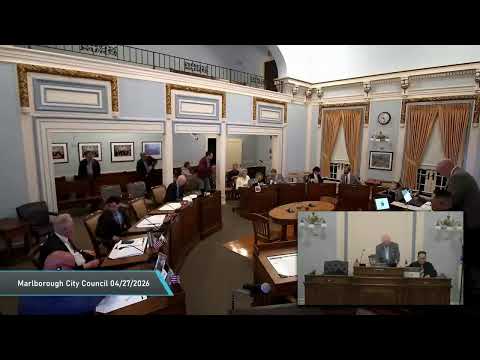
Marorrow — The City Council considered a special-permit application April 27 for two multifamily condominium buildings totaling up to 90 units at the corner of Ames and Forest Street, but the motion to approve did not reach the eight-vote threshold required for a special permit.
The proposal, filed by Marorrow Northboro Land Trust and presented to the council by attorney Brian Faulk (application referred into the meeting), had been recommended for approval by the Urban Affairs Committee. Councilors debated a mitigation package and conditions the committee compiled, then read into the record by the clerk.
Proponents described the site as two underused office buildings that the applicant seeks to convert and augment with residential development. Attorney Robert Buckley, speaking for the proponent, said preliminary fiscal modeling suggested the project could produce “north of $1.2 million in net tax revenue” for the city if it proceeds under the proposed zoning. Developer representatives said conceptual plans envisioned two condominium buildings (roughly 200 units each was discussed in earlier zoning commentary) with underground parking, green open space, and resident amenities.
Opponents and some councilors raised concerns about traffic, impacts on city services and schools, and whether the mitigation package adequately addresses those pressures. Resident Axel Koff, who lives on nearby William Street, told the council: “I don't think your traffic study is going to really decrease the traffic. It's actually going to increase the traffic,” saying he opposed additional large apartment projects in the neighborhood.
Council debate focused on three related points: the nature of the housing product (several councilors emphasized condominium ownership rather than rental, which some said could help local housing turnover), the scale and placement of mitigation dollars, and public-safety and school impacts. Councilor Naven, one of two dissenting votes, summarized his opposition: he said the project “is not the right project” for that site and cited concerns that the development would disproportionately increase service demands on the neighborhood and emergency responders.
The council recorded 16 conditions tied to any approval. Those conditions included a 12% affordable-homeownership requirement (units for buyers with incomes at or below 80% of area median income, to be listed on the state’s SHI), detailed site-plan review and phasing authority, stormwater and erosion-control supervision by a qualified site superintendent, green-design and EV-ready parking minimums, and several mitigation payments tied to local infrastructure: $90,000 earmarked for school-construction mitigation (to be paid in two $45,000 installments, one per building permit), $50,000 for sidewalks on Ames Street (two $25,000 installments), and $90,000 toward a proposed Westside Fire Station (described as $1,000 per multifamily dwelling up to the full $90,000). Landscaping, lighting, open-space protection (about 5.87 acres preserved as a vegetated buffer), and requirements to record the special permit at the registry of deeds were also included.
Supporters on the council stressed the package's mitigation and the neighborhood backing for this specific plan. Councilor Fillo argued the project offered needed ownership housing and substantial mitigation per unit, noting the total mitigation package and its intended public benefits.
When the council took the roll-call vote, the motion to approve the special permit failed to carry: seven councilors voted in favor and two opposed, short of the eight affirmative votes required for this special-permit type. The clerk so announced that the motion did not carry and the special permit was not granted.
Next steps: The council did not approve the permit at this meeting. The record includes the committee recommendation and the detailed conditions that had been proposed; proponents may decide whether to modify the plan, pursue further review, or return with revised mitigation or design changes. The council’s failure to reach the required threshold means the permit, as presented, will not move forward from this evening’s vote.