Get Full Government Meeting Transcripts, Videos, & Alerts Forever!
Get email alerts on the Public Health topic
No spam. Unsubscribe anytime.
Marlborough committee backs resolution supporting a "nicotine-free generation" policy, refers it to Board of Health after split vote
Summary
The Marlborough City Public Safety Committee voted to accept a resolution supporting a "nicotine-free generation" policy and referred it to the Board of Health, with supporters citing public-health harms and opponents raising enforcement and liberty concerns; the meeting record shows some confusion about whether a formal roll call occurred.
Marlborough — The Marlborough City Public Safety Committee voted to accept a city council resolution in support of a "nicotine-free generation" policy and referred the measure to the city's Board of Health for consideration, the committee chair said. The resolution (Order No. 26-1009773) was described in committee as a nonbinding expression of the council's support for policies that would phase out legal sales of nicotine products to future birth cohorts.
The resolution, read into the record by the chair, characterizes nicotine addiction as a leading preventable cause of illness and says communities should explore phased policies that would eventually prohibit sales to people born on or after Jan. 1, 2010 within the city once enabling ordinances or regulations are adopted. It lists covered products including cigarettes, cigars, smokeless tobacco, vaping products, nicotine pouches and synthetic nicotine, and calls for education, retailer outreach and partnerships with schools and health providers.
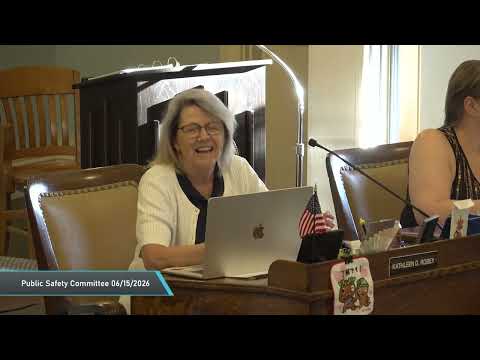
Councilor Costa moved to accept the resolution; the motion was seconded and the chair called for discussion before the vote. Councilor Roby said she shared concerns about enforceability and asked what legal effect a council resolution would have, noting that an enforceable rule would require the Board of Health to adopt regulations or the council to pass an ordinance. Councilor Aing (speaking during discussion) emphasized that "a resolution is just the expression of an opinion" and does not itself create binding law.
The resolution's sponsor, Councilor Vital, urged the committee to refer the matter to the Board of Health as a statement of support and cited statewide figures he said show large health-care costs tied to smoking and an annual toll of roughly 9,300 deaths from smoking-related disease in Massachusetts. Vital framed the referral as a step to give the Board of Health "more meat" to develop enforceable policy and said many other Massachusetts communities have pursued similar approaches.
After debate over the policy's symbolic versus enforceable value and the need for Board of Health public hearings, the chair recorded the committee vote as "two to one" in favor of accepting the resolution and called for adjournment. Multiple participants then expressed confusion about whether a formal roll call had been completed—one attendee said, "We didn't vote," and another subsequently characterized the action as unanimous—leaving an unclear meeting record about the procedural formality of the vote.
The referral sends the resolution and accompanying letters of support, including a letter from the city's director of public health and a student-led group at the Advanced Math and Science Academy, to the Board of Health for review. Next steps described in the meeting include the Board of Health potentially drafting enforceable rules and holding the required public hearings, or the council pursuing ordinance language if it seeks a directly enforceable local prohibition.
The committee adjourned at about 7:02 p.m.; the Board of Health was identified as the next body to consider the substance of the proposal.