Get Full Government Meeting Transcripts, Videos, & Alerts Forever!
Get email alerts on the Public Health Policy topic
No spam. Unsubscribe anytime.
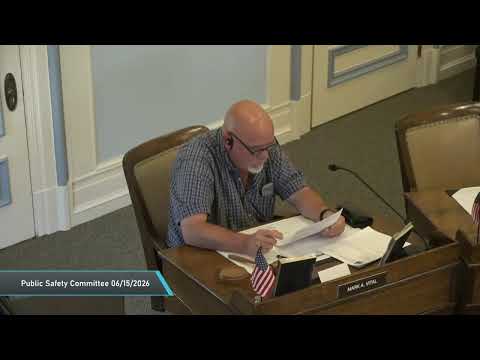
Public Safety Committee backs nicotine-free generation resolution, urges Board of Health review
Summary
The Marlborough Public Safety Committee on June 15 accepted a resolution supporting a phased nicotine-free generation policy that would bar sales to anyone born on or after Jan. 1, 2010, and asked the Board of Health and state agencies to review; the committee vote was recorded as 2–1 after discussion about enforcement and legal effect.
The Marlborough Public Safety Committee on June 15 voted to accept a resolution supporting a phased "nicotine-free generation" policy and asked that copies be forwarded to the Massachusetts Department of Public Health and the Marlborough Board of Health for review.
The resolution as read at the meeting would, if enabling ordinances and regulations are later adopted, permanently prohibit purchases of nicotine and tobacco products within the city by any individual born on or after Jan. 1, 2010. The resolution names cigarettes, cigars, smokeless tobacco, vape products, nicotine pouches and synthetic nicotine among covered products and calls for educational outreach and cessation support for residents and retailers.
Supporters cited public-health and fiscal arguments. A letter of support from Marlborough Director of Public Health Paul Dinwiddie and a student-letter from the Advanced Math and Science Academy’s 84 Movement were noted in the packet. A committee speaker summarized statewide health impacts and fiscal costs, arguing the resolution signals municipal support while the Board of Health develops enforceable language.
Councillor Robey said he shared concerns about the measure but questioned what legal effect a council resolution would have, noting that a resolution is not an enforceable rule and that the Board of Health or a city ordinance would be required to create enforceable obligations. "I could see if the Board of Health had a policy, which they could then enforce, or the City Council had an ordinance which could then be enforced," Councillor Robey said.
Other committee discussion emphasized that a resolution is an expression of intent and does not itself impose enforceable rules. Councillor Arsin explained that the Board of Health would need to draft policy language, hold public hearings and adopt enforceable regulations; he noted that the "born on or after 2010" cutoff would begin to affect purchases around 2031 as those cohorts age into the restricted status.
The committee recorded the vote as two in favor and one opposed. No roll-call of individual votes was read into the record during the session. The committee chair said copies of the resolution would be forwarded to the Massachusetts Department of Public Health, legislative representatives and the Marlborough Board of Health for consideration.
What happens next: passage of the resolution does not, by itself, create an enforceable ban. If the Board of Health or the City Council pursues enforceable rules or ordinances, those measures would require separate drafting, public hearings and legal review before taking effect.