Get Full Government Meeting Transcripts, Videos, & Alerts Forever!
Get email alerts on the Accessibility topic
No spam. Unsubscribe anytime.
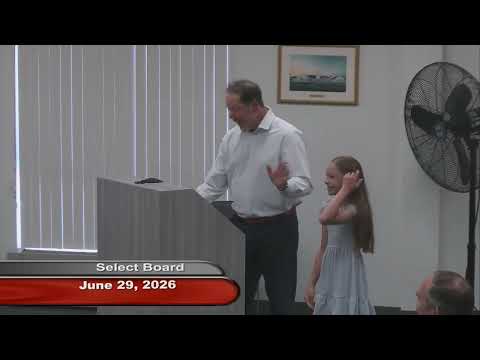
Select Board dissolves Harwitch Accessibility Rights Committee; ADA coordinator to gather volunteers and inputs
Summary
After discussion about quorum, leadership and changed legal requirements (transition plan), the Select Board voted to dissolve the Harwitch Accessibility Rights Committee and agreed the town’s ADA coordinator will solicit volunteer input and work with existing staff and committees to advance accessibility implementation.
The Select Board voted unanimously to dissolve the Harwitch Accessibility Rights Committee (HARK) amid concerns the group had not met in some time and lacked leadership and quorum.
Jim, the town’s newly appointed ADA coordinator, told the board he had contacted current and former HARK members who expressed interest in continuing work but acknowledged the committee had not held regular meetings following the departure of its chair. Board members noted that recent changes in federal and state ADA expectations mean municipalities are now required to maintain an engineered transition plan covering municipal properties; that central plan has, in practice, absorbed some of the prior committee’s responsibilities.
Several former HARK members and advocates spoke at the meeting, emphasizing that accessibility remains an important town priority and that municipal residents — particularly older residents — still need attention to building and park access. The board discussed options including reconstituting HARK if leadership and membership reappear, assigning HARK’s remaining functions to staff and existing committees, or absorbing volunteers into staffing processes.
The board approved a practical alternative: dissolve HARK now but instruct the ADA coordinator to gather interested volunteers, work with departmental staff on implementing the town’s transition plan, and inform the Select Board of volunteer and implementation progress. The board emphasized the town will accept and act on accessibility complaints and requests even without a standing HARK committee.
The dissolution takes effect immediately; the board said it could reconstitute an advisory committee in the future if sustained volunteer leadership emerges.