Get Full Government Meeting Transcripts, Videos, & Alerts Forever!
Get email alerts on the Police Strategy topic
No spam. Unsubscribe anytime.
Spokane police chief outlines two‑year strategy, cites new ballistic analysis, hotspot patrols and de‑escalation training
Summary
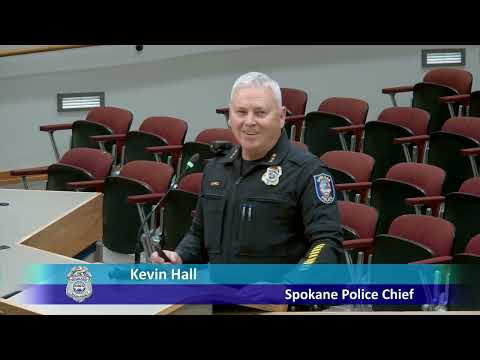
Spokane Police Chief Hall on June 30 told the Office of the Police Ombudsman Commission his two‑year strategic plan centers on a 10% reduction in violent gun crime, a locally run ballistic‑analysis capability to speed investigations, hotspot patrols, de‑escalation training and outreach ambassadors.
Spokane Police Chief Hall on Tuesday told the Office of the Police Ombudsman Commission the department’s two‑year strategic plan centers on measurable crime‑reduction goals, new technology and expanded community policing.
Hall said the plan’s first pillar aims to reduce violent gun crime citywide by 10% and described purchasing a local cartridge‑casing analysis system—what he called a 'Neighborhood National Integrated Ballistic Information Network'—to shorten ballistic matching time from months to two or three days. 'We’re now doing it in 2 to 3 days,' he said.
The chief said the department has stood up a dedicated Gun Violence Reduction Team that focuses only on shootings and patrol support, rather than traditional detective work, to keep investigations immediate and preserve evidence. He also described a hotspot strategy that divides the city into 500‑meter grids and uses automated dispatches every 90 minutes to send officers to a designated hotspot for 12–15 minutes to provide visible presence and deterrence.
Why it matters: Hall presented comparative year‑to‑date data he said show 'pretty significant double digit reductions' across several crime categories and argued the combined measures—technology, focused units and data‑driven patrols—are driving improvements. He cautioned that better data collection can increase counts of 'shootings without a victim' that previously went uncaptured.
Hall emphasized training and community engagement as pillars of the plan. He described the department’s rollout of ICHAT, an academically evaluated de‑escalation program, which has completed train‑the‑trainer sessions and is being expanded department‑wide. He also described 'dialog' officers who wear different uniforms and engage demonstrators to protect First Amendment activity, and an ambassador program that assigns volunteer officers to liaison roles for youth, LGBTQ and Hispanic/Latino communities.
The chief said the department has built a public‑facing dashboard on the Spokane Police Department website that is updated daily and will soon allow visitors to download raw data for independent analysis. He urged transparency while stressing the need to measure outcomes and avoid harm when implementing new programs: 'What’s the evidence to support it? Why are we doing this and then how do we measure it to make sure it’s successful,' he told commissioners.
Commissioners pressed for details about hotspots and ambassador access. Hall said hotspots are identified from chronic violent‑crime patterns over three years, geofenced in CAD and pushed to dispatch as level‑two, auto‑generated calls; he offered to share the ambassador list and evaluations. On training, he offered to provide the academic evaluations for ICHAT and invited commissioners to observe sessions.
Hall also discussed recruitment, saying vacancies were low (about ten) and that the department is prioritizing entry‑level hires over costlier laterals to maximize staffing under fiscal constraints. He credited reductions in uses of force, officer‑involved collisions and pursuit incidents to supervisory review and de‑escalation work, while acknowledging continued attention is necessary.
The presentation closed with commissioners thanking Hall for a 'comprehensive overview' and requesting materials and evaluations that he said he would provide.