Get Full Government Meeting Transcripts, Videos, & Alerts Forever!
Get email alerts on the Utilities topic
No spam. Unsubscribe anytime.
Farmville residents press council on proposed $16 flat utility increase; town manager cites stability and rising costs
Summary
Residents urged the council to abandon a flat $15.63 monthly utility surcharge in favor of usage-based increases, saying it disproportionately burdens low‑income and low‑usage households; Town Manager Oaks said a $5-per-utility flat fee was proposed to stabilize rates and cover rising supply, labor and equipment costs and estimated it would raise the average bill about 5.31%.
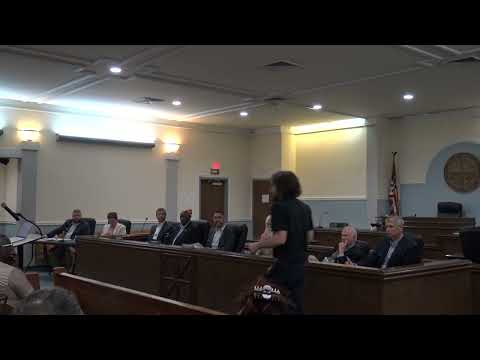
A prolonged public comment period at the June 29 Farmville Town Council meeting centered on a proposed flat monthly utility surcharge intended to stabilize utility funds.
Multiple residents said a flat $15.63–$16 monthly increase across water, sewer, electric and garbage is regressive. ‘‘Why should Mrs. Jones subsidize the utility increase for a business like Physicians East?’’ asked Celia Stone, contrasting a widow on a small home with a large commercial account. Several speakers, including Sheila Turnage and Peggy Melton, said the hike would be especially hard on fixed‑income seniors and households below the poverty line.
Residents pushed the council to instead use a usage‑based percentage increase and to separate residential and commercial rate calculations. ‘‘Maybe you should split it up and raise commercial on one average and residential on another average,’’ Lonnie King told the board.
Town Manager Oaks defended the proposal as an attempt to stabilize utility finances amid rising costs. Oaks said the flat charge covers not only purchased electricity and water but also equipment, poles, supplies and the utility workforce. Using a methodology that averaged two peak months and two low months, staff estimated the current average bill at $278.77 and said adding the proposed $5-per-utility flat fee (and the other small adjustments) would raise the average to about $294.39 — a 5.31% increase. Oaks said the measure aims to avoid the volatility that large usage-based swings can cause for customers during extreme weather months.
Speakers asked for more transparency on billing line items. ‘‘If I turn my main breaker off and my water off at the street, I still owe the town $105 a month. What is that for?’’ asked Scott Myers. Oaks said the utility basic charge covers fixed costs and recommended clearer bill explanations and rate‑sheet details for customers.
Council members and staff also noted options: an equal payment plan is available to smooth bills over 12 months, and staff said they would present additional analysis if the board asked for alternative scenarios (for example, a purely percentage‑based increase using a 12‑month average).
The meeting did not record a final vote adopting the rate change during public comment; the council discussed timing and the ability to revisit rate approaches. Town staff said further discussion could be scheduled after the budget cycle and that the proposed changes were designed to keep Farmville’s flat charge competitive with neighboring towns while covering durable costs.
Next steps: staff will refine explanations for customers, consider separating commercial and residential calculations if directed, and can place more detailed rate‑structure options on a future agenda for board decision.