Get Full Government Meeting Transcripts, Videos, & Alerts Forever!
Get email alerts on the Tax Policy topic
No spam. Unsubscribe anytime.
Council reaffirms opposition to proposed centralized state sales-tax collection
Summary
Iberville Parish Council voted Oct. 21 to reaffirm IPC Resolution 2021-00007 opposing a state constitutional amendment that would centralize sales-tax collection with the Louisiana Department of Revenue, citing concerns about auditing and revenue impacts.
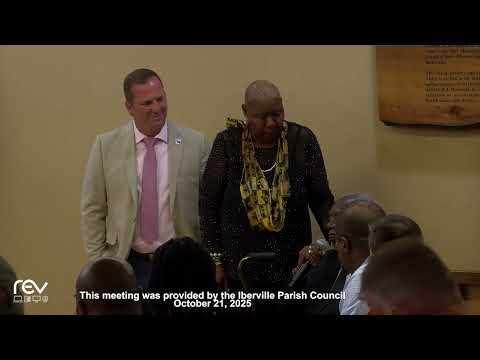
The Iberville Parish Council on Oct. 21 voted to reaffirm its prior resolution opposing a proposed state constitutional amendment to centralize collection of local sales taxes with the Louisiana Department of Revenue.
Mr. Dunn, who brought the item to the floor, warned that centralized collection could deprive the parish of revenue and local auditing control. He asked David Hall, the parish official responsible for sales-tax administration, whether the state has used the parish's audits; Hall replied that the state had not requested local audits to date. Citing that point, Dunn urged reaffirmation of IPC Resolution 2021-00007, which opposes centralization.
The council first voted to add the reaffirmation to the agenda and then voted to reaffirm the resolution. Multiple council members spoke in favor; the motion carried on roll call.
Why it matters: centralization of sales-tax collection has been debated statewide because it changes who collects taxes, how audits are handled and how revenue flow/timing might change for local governments. The council framed the vote as a protective measure to preserve parish revenue administration and local auditing capacity.
Next steps: The resolution will be available to the Police Jury Association and other legislative stakeholders ahead of the 2026 legislative session, when supporters may propose the constitutional amendment.