Get Full Government Meeting Transcripts, Videos, & Alerts Forever!
Get email alerts on the Dual Enrollment topic
No spam. Unsubscribe anytime.
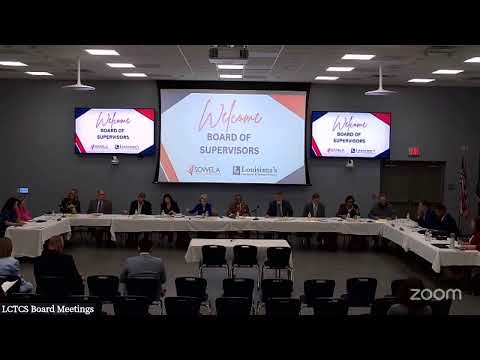
LCTCS and local schools expand synchronous ‘VIP’ virtual instruction to 11 high schools
Summary
LCTCS leaders described the Virtual Instruction Program (VIP), a synchronous dual-enrollment model delivering live college courses to students at 11 high schools to expand course access in rural and small schools while keeping students on their home campuses.
Dr. Van Meter and Dr. Helms presented the VIP (Virtual Instruction Program), a synchronous dual-enrollment initiative serving 11 high schools across a large parish. The program places facilitators on each high school campus while college instructors teach remotely, enabling small or rural schools to offer courses such as physics, calculus and college English to students who otherwise lack access.
“This is not normal online classes… this is a synchronous class which means you've got a teacher every day teaching your kid,” Dr. Van Meter said, explaining the emphasis on human interaction and campus-based facilitators. He and other presenters said the model preserves student participation in home-campus activities (band, athletics, homecoming) while providing access to college-level instruction.
A principal (Mr. Sanders) and several students described the program’s benefits. One student said the VIP program “has better prepared me for the future” and that it helped build confidence and time-management skills while allowing students to remain leaders on their high school campuses. Board members noted the program’s award from the Louisiana Department of Education and praised its potential to broaden academic offerings at small schools.
Dr. Helms explained the program’s logistical requirements — synchronized bell schedules across participating high schools, a dedicated room and facilitator at each site, and a central pool of VIP instructors — and said staff took care to meet site and crediting requirements under state rules. The board viewed the VIP model as an equity-of-access effort rather than a replacement for in-person campus instruction.