Get Full Government Meeting Transcripts, Videos, & Alerts Forever!
Get email alerts on the Local Governance topic
No spam. Unsubscribe anytime.
Council pauses plan to convert Recreation Commission into municipal department after hours of public comment
Summary
Town Attorney Scott Simon described audit findings that prompted a proposal to dissolve the volunteer Recreation Commission and create a Recreation Department while protecting the recreation trust fund. After hours of public testimony and concerns about transparency and stewardship, the council voted to remove the ordinance from tonight’s agenda for additional review.
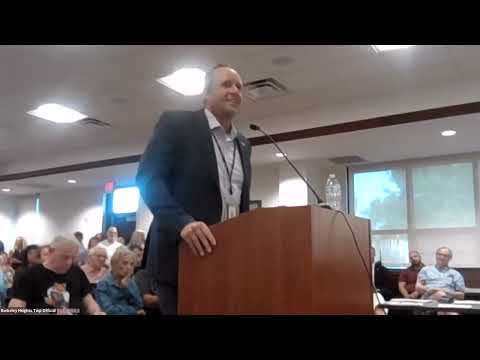
Town Attorney Scott Simon presented the council with the legal rationale for an ordinance that would move the existing Recreation Commission’s functions under a new municipal Recreation Department and establish a Recreation Advisory Committee. "If this ordinance is adopted, residents would not see any change whatsoever," Simon said, repeatedly assuring residents that programs, staffing and the recreation trust fund (which he said contains approximately $1.7 million) would be preserved and continue to be used only for recreation purposes under state law.
Why it mattered at the meeting: The ordinance prompted an unusually large turnout and lengthy public-comment session. Many residents and some recreation commissioners said the commission is effective, largely self‑funded and trusted by families; they asked the council to slow the process, provide more documentation, or work with the commission to correct the specific procedural issues auditors found. Other speakers — including several council members and the attorney — said auditors identified deficiencies in revenue tracking and internal controls that legally expose the township and therefore require a governance change or greater municipal oversight.
Key points and procedural outcome: Simon walked the audience section‑by‑section, explaining that the proposed code changes would (a) create a Recreation Department led by a director appointed by the mayor with council consent; (b) transfer any funds held by the commission into the recreation trust fund; and (c) create a recreation advisory committee to provide volunteer input. He stressed that trust‑fund monies are audited annually and are statutorily restricted to recreation purposes.
Public reaction and council response: Speakers focused on process and trust. Multiple residents asked why the ordinance was posted with limited notice, whether the recreation commission had been given time to fix the audit findings, and what would happen to long‑running programs and scholarships run by separate nonprofit partners. Several speakers explicitly urged the council to "table" the ordinance and allow more stakeholder discussion.
Council action: After extended testimony, a council member moved to remove the ordinance from tonight’s agenda to allow additional public engagement and review. The motion passed by roll‑call vote. No final adoption or changes to the recreation code occurred at the meeting.
Next steps: Council members said they would compile answers to outstanding questions, re‑engage the commission, and schedule further discussion; the commission announced a public meeting to continue the conversation.