Get Full Government Meeting Transcripts, Videos, & Alerts Forever!
Get email alerts on the County Finance topic
No spam. Unsubscribe anytime.
County treasurer says $917,955 contingency covered retroactive foreclosure claims; Supreme Court case could alter payouts
Summary
Sandlac County Treasurer Trudy told commissioners the county set aside about $917,955 in 2020 to cover possible retroactive tax-foreclosure excess-proceeds claims dating back to 2013–2020; she said most claims are resolved but a related case headed to the state Supreme Court could require larger payouts if decided against counties.
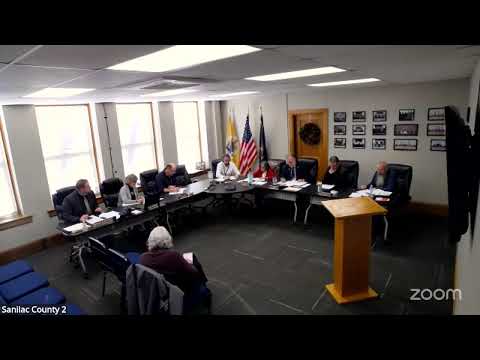
Sandlac County Treasurer Trudy told the Board of Commissioners on Nov. 25 that a statutory change in 2019 allowing owners foreclosed by the treasurer to file claims for excess auction proceeds prompted the county to set aside a contingency of about $917,955 in 2020 to cover possible retroactive claims.
Trudy said the county worked with Title Check to gather records for foreclosed parcels dating back several years and that six retroactive claims emerged from the earlier period. She described the process as judicially driven — judges review claimant eligibility and direct excess-proceeds payments when appropriate — and said legal costs and Title Check fees were incurred while defending some claims. She noted the county keeps a five-percent fee from excess proceeds under the statute, a sum she likened to a realtor fee.
Why it matters: that contingency reduced the general fund’s annual supplemental contribution (Trudy said the fund historically provided just under $300,000 a year to the general fund), and resolving retroactive claims will allow the county to stop carrying the larger liability on its books. Trudy said most retroactive matters are settled, but one related case out of Isabella County is headed to the state Supreme Court; if the high court requires counties to return larger amounts (for example, recalculated fair market value rather than sale proceeds), it could affect numerous counties’ finances.
Trudy outlined scheduling and next steps: current-year foreclosures continue under the normal cycle (properties foreclosed in April; claimants must file by July 1; judges typically hear those matters the following March), and she expects a handful of additional payouts to be processed in the coming months. She described some claim amounts as too small for claimants to pursue (one person told her an expected payment of about $48 was outweighed by filing costs).
The board praised the treasurer’s conservative approach in setting the contingency and noted that, aside from the pending Supreme Court appeal, the county appears to be close to resolving the retroactive liability. No formal board action was taken on the treasurer’s report at the meeting; commissioners thanked Trudy for the update.