Get Full Government Meeting Transcripts, Videos, & Alerts Forever!
Get email alerts on the Licensing topic
No spam. Unsubscribe anytime.
Public hearing shows broad neighborhood support and some park concerns over Virgin Goods Cafe liquor license
Summary
At a June 16 public hearing, residents presented a 236-signature petition supporting a beer-and-wine license for Virgin Goods Cafe; several neighbors voiced concerns about park planning, fencing and public drinking, while others noted state safeguards requiring restaurants to keep alcohol sales under 20% of revenue.
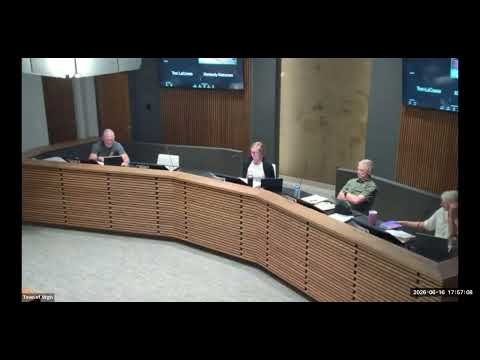
The Virgin Town Council opened a public hearing June 16 to take comment on local consent for a beer-and-wine license for the new Virgin Goods Cafe. Staff explained a recent change in state law allows the council to receive public input and later decide whether to consent; final approval remains with the state.
A resident submitted a petition with 236 signatures in support of local consent. Many neighbors said they welcomed the cafe as a neighborhood amenity that could boost local revenue and offer casual dining; several speakers pointed to similar operations in nearby Leverkin as precedent.
At the same time, a number of residents urged care on park planning and site protections. One participant argued the town had not finalized a plan for the adjacent town park and warned against changing park use or permitting proximity without a plan in place. Hannah Barry, whose property abuts the site, asked staff to ensure the previously discussed privacy fence appears on the approved site plan so her backyard is protected.
Michelle Kellen reminded the council that Utah law enforces a restaurant-sales safeguard (an 80% food / 20% alcohol ratio for most licenses) and that the Division of Alcoholic Beverage Control performs regular audits. Multiple speakers emphasized the cafe seeks a beer-and-wine license and said the state’s licensing rules and on‑premise consumption make approval consistent with local practice.
No decision was taken at the hearing; staff will forward the record to the state and the council may formally act after the statutory waiting period. The council asked staff to attach the petition to the hearing record and to follow up with site‑plan and fencing conditions raised by neighbors.