Get Full Government Meeting Transcripts, Videos, & Alerts Forever!
Get email alerts on the Planning Ordinances topic
No spam. Unsubscribe anytime.
Council reviews planning-commission ordinances; shuttle-stop rehearing and accessory‑structure conflicts flagged for staff research
Summary
Council reviewed several ordinances from the planning commission: a misposted shuttle-stop ordinance that must be reheard, an accessory-structure draft with conflicting size and permit language, and a Joint Utility Committee ordinance recommended without revisions; staff were asked to correct Municode formatting, clarify exemptions, and research statutory impacts.
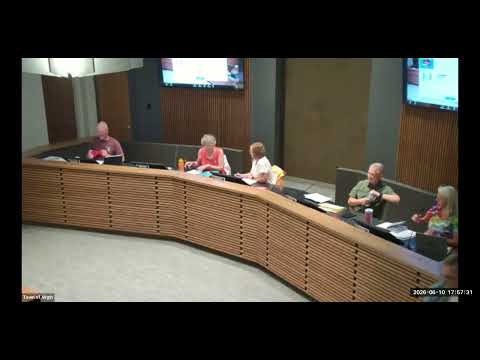
At its June 10 work meeting, the Virgin Town Council discussed multiple planning-commission items and asked staff to correct posting errors and reconcile conflicting ordinance language before council action.
Staff member Mark briefed the council that the wrong shuttle-stop ordinance version had been posted for the planning‑commission hearing. He said the commission will rehear the matter with the correct text; council members asked staff to confirm the drafting method Municode prefers and to show struck/stricken text so the public can see amendments.
The council also examined a draft accessory-structure ordinance and identified internal inconsistencies. One council member pointed out conflicting size and permit thresholds — references in the draft to 200 square feet, 400 square feet, and larger commercial caps of 3,600 square feet appeared in different sections. The council noted a contradiction where a provision exempts temporary storage units of “200 square feet or less” while other sections prohibit portable/temporary storage. One member asked Riker to research the relevant state citation (63I-2-210) and reconcile those conflicts before the ordinance returns to council.
On the Joint Utility Committee ordinance, Mark reported the planning commission recommended it with no revisions; the council may consider adoption at the following regular meeting.
A separate procedural matter drew comment: planning commissioners had voted to “table indefinitely” a good‑neighbor overlay ordinance. Council members debated whether that phrasing effectively kills the proposal or simply places it on a table that a future council can revive; members discussed options including pulling the item from planning entirely to remove it from further commission consideration.
Council actions arising from the work meeting are procedural: staff will re-post the correct shuttle-stop ordinance for rehearing, Riker will research statutory references affecting accessory-structure fees and exemptions, and staff will tidy draft language for public posting and Municode submission.