Get Full Government Meeting Transcripts, Videos, & Alerts Forever!
Get email alerts on the Ymca Referendum topic
No spam. Unsubscribe anytime.
Lacey Township to vote in November on proposed YMCA; presenters tout jobs and discounts, residents demand clearer cost, contract and liability details
Summary
Presenters described a YMCA on township land that they say would create about 135 jobs and $2.4 million in annual wages, offer resident discounts and a local advisory seat; residents repeatedly asked for pro forma budgets, lease terms and insurance details before a November referendum.
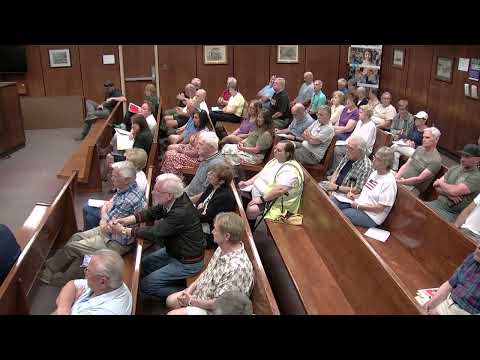
Presenters for a proposed YMCA told the Lacey Township Committee on Thursday that a public–private community center on township-owned land could draw programs for youth and seniors, create local jobs and anchor a nascent town center — but dozens of residents in a long public-comment session said the committee has not yet provided essential financial and contractual information and urged caution ahead of a planned November referendum.
Rod, introduced himself as a YMCA representative, framed the project as a way to “develop a center of town or a town square” and said the organization would deliver child care, job training, aquatics and programs to reduce isolation among seniors. He said the YMCA team includes capital and operations staff and told the committee, “I’m here tonight representing a team of 20.”
Growth-adviser Danny Forester of Grow presented the market case and said the model must be “right-sized” to avoid ongoing municipal subsidies: “What we don’t want to do is create a community asset that…needs to be bailed out year-over-year by the township,” he said. Forester and Rod cited a community-needs assessment that identified seniors and youth as underserved, and they presented draft community benefits including a 10% membership discount for residents, 20% discounts for local businesses with 10+ employees and sliding-scale financial assistance.
Presenters gave several quantitative estimates: the YMCA team projected the facility would employ about 135 people and pay roughly $2.4 million in direct wages annually, and they estimated spillover spending of $200,000–$600,000 per year for local businesses. Presenters described schematic plans that would include gymnasia, dual aquatics tanks and multipurpose community rooms on township-owned acreage behind the municipal building.
Officials said the committee intends to put a referendum on the November ballot so voters can decide whether the township should borrow for the capital project; presenters said many lease and term-sheet items remain in draft and additional documents would be posted on the township website. The committee also introduced Resolution 2026-215 to convene an executive session on personnel, litigation and contract matters.
Residents pressed repeatedly for numbers, contracts and contingency plans. Speaker Steve Ball said the township was already “$32 million in debt” and alleged $80,000 had been spent on YMCA planning, saying that “if that’s true, we’re now over $400,000 of wasted, hard-earned taxpayer money.” The mayor replied that he did not have detailed figures at the meeting and that many terms remained under negotiation. Several commenters requested pro forma capital and operating budgets, indemnification language, the draft lease or management agreement, and clearer statements about who would be responsible for maintenance and insurance if the township owns the building and the YMCA operates it.
Others warned of operational and competitive risks: Pat Doyle, who described commercial property experience, told the committee that a township-owned building with two pools would expose the municipality to landlord liability and asked to see indemnity and insurance details before any vote. Multiple speakers said they preferred a lease model in which an operator builds or leases the site rather than the township issuing long-term debt and retaining ownership.
Supporters of the proposal urged voters to weigh benefits to public health and access. Dan Kpinsky, introduced himself as a public-health director, testified that investment in recreation and social infrastructure could produce public-health dividends and said he “fully support[s] the YMCA.” Jeremy Grunnin, vice chair of the Jersey Shore YMCA board, said regional fundraising and network support would flow to the town and highlighted local need, citing that “40% of Lacey Township is what’s considered ALICE,” a measure of asset-limited, income-constrained households.
Speakers debated program scope. Several residents said they were worried the YMCA might be used for housing or long-term sheltering; presenters repeatedly said the project as proposed does not include housing and that any emergency sheltering discussed would be temporary, storm-related use of multipurpose spaces. Community members also asked whether an environmental review would be required; officials said that review had not been completed and could be pursued before the referendum.
Officials acknowledged open questions and said they planned to make additional materials available: the committee cited an August timeline for drafting referendum language (the public was told a final ballot resolution must be adopted by Aug. 28) and promised to publish term-sheet materials, comparables and financial assumptions in advance of the vote.
What’s next: the committee introduced a resolution to meet in executive session to discuss contracts and litigation; the presentation team and township staff said they would continue negotiating the terms of a community-benefits agreement and leases and would post updated materials on the township website ahead of any formal approval to place the referendum on the ballot.