Get Full Government Meeting Transcripts, Videos, & Alerts Forever!
Get email alerts on the Cdbg Allocations topic
No spam. Unsubscribe anytime.
Clay County unveils proposed 2026 CDBG plan, prioritizes sidewalks, parks accessibility and nonprofit support
Summary
Clay County grants staff presented a flexible 2026–2030 Consolidated Plan and the 2026 Annual Action Plan for HUD CDBG funds, proposing $1,057,772 in year‑one allocations with a focus on sidewalks/ADA, parks accessibility, nonprofit capacity and a July county hearing schedule.
At a public meeting on the Community Development Block Grant (CDBG) consolidated plan, Clay County Grants Compliance Manager Jodie Heistler outlined the county’s proposed five‑year priorities and the 2026 Annual Action Plan for HUD funding, emphasizing a shift from individually focused home‑rehabilitation to broader, countywide infrastructure and nonprofit investments.
Heistler said the consolidated plan covers 2026–2030 and is intended to serve low‑ and moderate‑income areas and facilities that primarily serve those populations. She described the plan as a framework—not a fixed project list—and said public comments from these meetings will be compiled and sent to the county commissioners ahead of public hearings scheduled for July 14 and July 28, when the commissioners will consider approval and allocations.
The five‑year priorities Heistler named are infrastructure and connectivity, public facilities and parks, neighborhood enhancements, and community partnerships/nonprofit capacity building. She said the county is prioritizing sidewalks and ADA accessibility: five new sidewalks have been completed recently and staff are working on replacements and ADA upgrades along Route 218, with plans to fill sidewalk gaps as adjacent construction finishes.
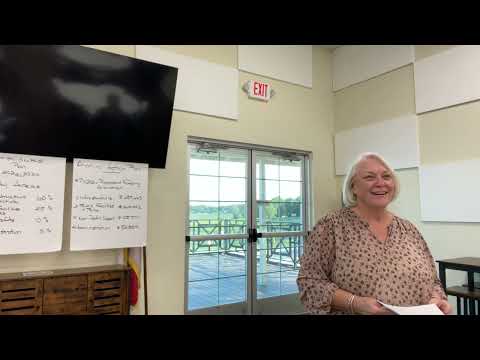
Heistler presented proposed high‑level allocation percentages for the consolidated plan—about 60% infrastructure/connectivity, 25% public facilities and parks, 10% nonprofit partnerships, and 5% administration—and gave a year‑one dollar breakdown that sums to $1,057,772: $634,663 for infrastructure (primarily sidewalks), $264,443 for public facilities and parks (ADA improvements), $105,777 for nonprofit support (including community cleanups), and $52,889 for administration. Heistler described those figures as flexible and said unspent administrative dollars could be reallocated to programmatic needs.
Staff also said priority projects will be those already approved by the Board of County Commissioners and aligned with the county strategic plan to streamline implementation. Heistler listed recent and ongoing sidewalk work (including Mallard Drive, Blue J, Chalkall, Harrison and Jefferson) and said most projects from the current five‑year cycle are wrapping up.
On timing and compliance, Heistler reminded attendees that HUD grants are generally reimbursement‑based; funds not spent and documented by HUD deadlines may be deobligated. She said staff must submit required financial and program reports to maintain HUD compliance.
The public comment period will remain open through the remaining scheduled meetings and the two commission hearings; staff said they will publish application and selection processes on county websites if the county approves nonprofit capacity awards. The county will take final votes at its July hearings.