Get Full Government Meeting Transcripts, Videos, & Alerts Forever!
Get email alerts on the Infrastructure Transportation topic
No spam. Unsubscribe anytime.
Wabash opens new railroad overpass aimed at cutting downtown delays and improving emergency response
Summary
City and state officials gathered in Wabash to mark the opening of a state-funded railroad overpass intended to reduce downtown congestion, improve emergency access and support local growth. Officials credited 2017 legislation and a $125 million local-tracks funding program for enabling the project.
WABASH, Ind. — City and state officials formally opened a new railroad overpass in Wabash on a day of speeches and a ribbon-cutting that marked the end of a yearslong effort to separate vehicle and rail traffic in the downtown area.
Shelley, the event host, called the work “the realization of a vision” and said the overpass was more than a ribbon-cutting: “This railroad overpass is 1 of those projects,” she said, that will change the way the community “moves, grows, and connects.”
The overpass was financed and advanced in part through state programs launched after the 2017 legislative session. Jason Kiser, deputy commissioner for the Indiana Department of Transportation, said lawmakers passed House Enrolled Act 1002, which created a local-tracks call for projects and “provided a $125,000,000 for local communities to improve railroad safety,” enabling cities such as Wabash to pursue grade separation work. He said the project will reduce delays at the downtown crossing and provide “unobstructed emergency vehicle response” across the line.
“The strength of this nation's infrastructure is part of what makes us the greatest nation in the world,” Kiser said, thanking state leaders and local partners for their collaboration. He also thanked Wabash residents for their patience through construction and disruption.
Jason Kiser and other speakers credited partnerships among municipal officials, the Indiana Department of Transportation, design and construction firms and land-acquisition contractors for delivering the project.
Patrick McAllister of WSP, the lead design firm, said his team was “proud to be the lead design firm for this important project for the city,” and named teaming partners including Compass, CTL, Hansen and SGCA. He said land-acquisition work required relocating 10 residences and thanked the city superintendent and real-estate partners for completing that work.
Local historian Pete Jones provided a historical perspective, noting complaints at the crossings date to the 1850s and recalling a newspaper anecdote in which a train crew’s lunch and a nap left crossings blocked for hours. “They had left the train parked to block all those crossings,” he said.
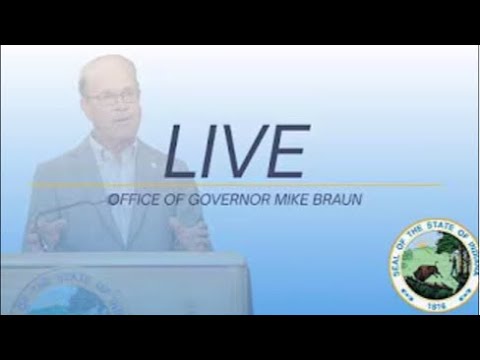
Governor Mike Braun attended and framed the project in a statewide economic and infrastructure context, saying investments through the state and programs such as REDI and community crossings make projects like the Wabash overpass possible for small towns. Braun described lower statewide unemployment and said improved fiscal management has freed resources to pursue local infrastructure.
Mayor Scott Long, first elected in 2015, thanked partners and residents and summarized the local decisions that shaped the project. Long said a 2017 grade-separation study evaluated multiple locations and that an underpass at other sites would have cost an estimated $30–$40 million versus an estimated $10–$12 million at the chosen location. “That decision was a no brainer,” he said, arguing the selected site balanced cost, access to historic structures and the city’s needs.
Organizers said the overpass is intended to cut the frequency of downtown crossings blocking traffic, shorten delays for school buses and commuters, and improve response times for emergency vehicles. After the remarks, Shelley invited department heads, council members and other officials to the north side of the tent for the ribbon-cutting.
What happens next: officials did not announce follow-up policy actions or funding obligations at the ceremony. Construction is complete at this crossing; the city said staff and partner agencies will continue to monitor outcomes and coordinate on adjacent crossing safety measures.