Get Full Government Meeting Transcripts, Videos, & Alerts Forever!
Get email alerts on the Urban Forestry topic
No spam. Unsubscribe anytime.
Tree board narrows 2026 street-tree sites, flags utility and homeowner concerns
Summary
Harbor Springs Tree Board identified top locations for the 2026 street-tree program, including two sites on State Street and plantings near the elementary school, and agreed to coordinate species choice and overhead-utility checks with DPW before ordering trees.
The Harbor Springs Tree Board on April 17 set preliminary locations for its 2026 street-tree program and stressed the need to match species to site constraints such as overhead utilities, walls and adjacent homeowners.
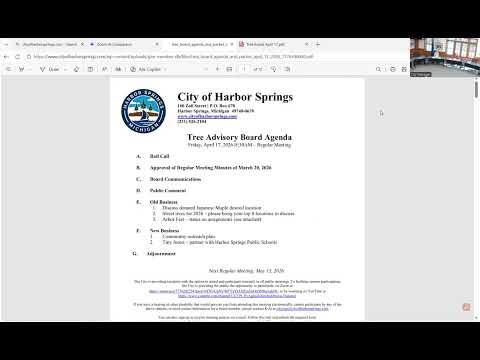
Board members settled on an initial list of eight candidate planting locations, including two spots on State Street, two sites near the elementary school on Lake Street, and priority plantings on Ann and Spring streets. Members said the selection balances visibility, sidewalk shading for students and traffic-calming benefits on wide sections of Ann Street.
Why it matters: the board’s choices determine which public-right-of-way sites will receive new trees, which affects pedestrian shade, stormwater stability and neighborhood character. Members emphasized that species must be selected to avoid conflicts with utility wires and to suit narrow planting strips along some roadways.
Members raised practical constraints and next steps. They discussed whether smaller, narrower-growing trees would better fit tight streetscapes and retain sight-lines for drivers and maintenance vehicles. The board identified hornbeam as an example of a narrower shade tree to evaluate and agreed members would bring photos and precise site notes to the next meeting so staff can check for wire conflicts and other installation constraints.
The board also flagged potential homeowner resistance at some sites where tree pits abut private property. Members noted the city’s ordinance and maintenance expectations but agreed to be cautious: "if they really really don't want it and aren't going to take care of it, it could be a problem," a member said, urging outreach before planting.
Next steps: board members will take photos of candidate locations, coordinate with the Department of Public Works on overhead-wire constraints, and return with a finalized top-eight list and species recommendations at the next meeting. The board recorded assignments to identify precise planting spots, verify utilities, and prepare an order for trees once sites and species are confirmed.
No formal ordinance change or final contract was approved at the meeting; the item remains a planning decision pending DPW checks and final site confirmations.