Get Full Government Meeting Transcripts, Videos, & Alerts Forever!
Get email alerts on the Housing And Zoning topic
No spam. Unsubscribe anytime.
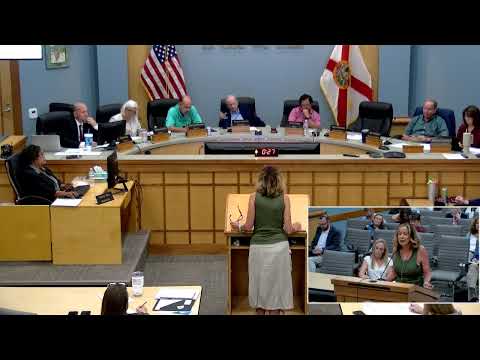
Commissioners and residents debate affordable housing, zoning volatility and the role of mobility fees
Summary
Commissioners and public commenters debated recent multifamily development patterns, local zoning changes and mobility/developer fees; speakers said vacancies in some apartments and state-level limits on fee collection make workforce housing a strategic priority even where the county currently lacks fee authority.
Affordable housing, rezoning and developer-financing mechanisms were a central topic during the workshop, with commissioners and residents expressing concern about the pace and character of recent multifamily development in parts of Walton County.
Commissioners said many apartment projects built on the south end and in Freeport remain largely unoccupied and some are converting to short‑term rentals. Speakers said developers’ earlier commitments about affordability — for example reserving units at certain percentages of area median income — have not always materialized. One public commenter tied that pattern to a broader legislative environment, warning that if the county does not act the state will impose development standards.
The board discussed 'zoning volatility' — frequent rezoning or changes that make land-use expectations uncertain for property owners. A Freeport resident proposed considering limits on how soon zoning can change after a property purchase (for example, a 10‑ to 50‑year stability window) to protect owners’ expectations; commissioners acknowledged such measures could conflict with state law and would require legal review.
Commissioners also discussed mobility fees and their use to fund infrastructure. Staff and several commissioners said Walton previously collected developer impact or 'mobility' fees that provided funds for roads and infrastructure but that state action (referred to in the meeting as SB180/SB 180) curtailed the county’s ability to collect those fees. Commissioners agreed to keep mobility‑fee policy on the strategic‑plan list so the county can be ready if state constraints shift.
Throughout the session, speakers emphasized the tension between accommodating growth and preserving neighborhood character: some commissioners urged caution on rezonings and suggested using conditional approvals with enforceable conditions and timelines where permitted by state law. Several public commenters recommended regular public reporting on strategic‑plan progress and called for intergovernmental coordination to align county, municipal and regional efforts.
No votes were taken. Staff said it will compile the board’s input and return a draft for review on the stated schedule.