Get Full Government Meeting Transcripts, Videos, & Alerts Forever!
Get email alerts on the Zoning topic
No spam. Unsubscribe anytime.
Committee approves zoning change to allow museums, galleries and libraries in light‑industrial zones
Summary
The New Haven Board of Alders’ legislation committee voted to permit cultural activities (museums, galleries, libraries) as‑of‑right in light‑industrial districts, advancing a citywide zoning text amendment after debate over tax impacts and review pathways.
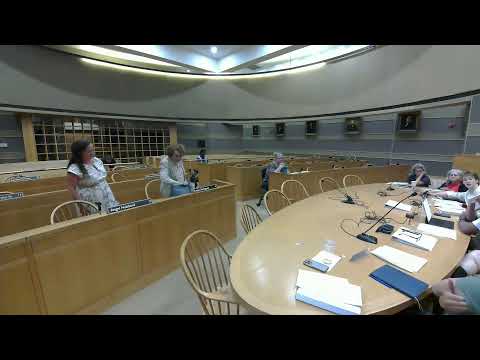
The New Haven Board of Alders’ legislation committee approved a zoning text amendment on June 30, 2026, to designate museums, art galleries and libraries as permitted uses in the city’s light‑industrial (IL) districts. The committee advanced LM‑2026‑09 after a contentious debate about whether cultural uses should require additional public‑review procedures.
City Plan deputy director Zach Sachariah told the committee that staff recommended approval because the change aligns with the Vision 2034 comprehensive plan and the city’s interest in adaptive reuse of underutilized industrial buildings. “Our light industrial district . . . has been amended a few times to permit a variety of non‑industrial uses,” Sachariah said, adding that staff viewed the amendment as a minor, plan‑aligned change.
Petitioners and arts leaders urged the committee to create certainty for nonprofits and cultural organizations seeking to reuse old industrial properties. Attorney Carolyn Conn, representing the petitioner, said special‑permit processes can take years and create financial uncertainty for nonprofits: litigation over past special permits, she said, “is expensive and lengthy and it . . . doesn't allow nonprofits to apply for community investment funds because they want to see certainty.” City economic development and cultural staff described examples of successful adaptive reuse and noted arrangements where tenants continue to pay real‑property taxes.
Opponents on the City Plan Commission had raised concerns about potential tax‑revenue loss if nonprofit uses replace taxable industrial uses. Committee members debated that point and whether the ordinance should require a discretionary special permit rather than allow cultural uses as‑of‑right. An amendment to require special‑permit review was proposed but defeated. The committee’s motion to permit the uses as‑of‑right then passed in committee; the recorded committee tally was 4 yes, 2 no.
Supporters said the change will unlock reuse of long‑vacant buildings and spread cultural venues beyond downtown to multiple wards. Public commenters from the Arts Council and local developers described a shortage of rehearsal, performance and studio space and pointed to comparable adaptive‑reuse models in other cities.
The committee’s action is the committee‑level approval of the text change; the amendment will proceed to the full Board of Alders for further readings and final action. The petitioner and city staff said the change is intended as a citywide rule, not a site‑specific rezoning, and that site‑specific reviews such as site‑plan approvals and department reviews would still apply.