Get Full Government Meeting Transcripts, Videos, & Alerts Forever!
Get email alerts on the County Finance Audit topic
No spam. Unsubscribe anytime.
Starr County commissioner court hears clean audit, approves audits and a budget amendment
Summary
The Starr County commissioner court received an unmodified (clean) audit opinion for fiscal year ending Sept. 30, 2025; auditors showed a small general-fund decrease, explained a lease accounting change and the court approved three audits and a budget amendment by voice vote.
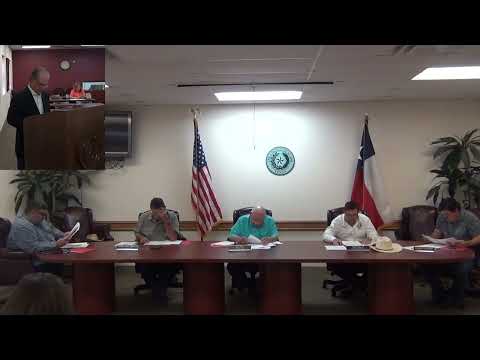
The Starr County commissioner court met in a special session June 29 and received an audit report that the auditor characterized as an unmodified, or "clean," opinion for the fiscal year ended Sept. 30, 2025. The court approved the three audits presented and a separate budget amendment by voice vote before adjourning.
The internal auditor told the court that "the auditor's opinion is unmodified and that translates into a clean opinion," and walked commissioners through the principal figures. In the general fund the auditor reported total revenues of roughly $23.7 million and total expenditures of about $24.2 million, yielding an operating deficit of approximately $1.14 million. After other financing sources of about $114,816 the fund balance decreased by about $34,011 for the fiscal year, leaving an ending general fund balance of about $9.62 million, the auditor said.
The auditor also highlighted enterprise and proprietary operations. "The international bridge had an increase" and ended the year with roughly $3.14 million in net position, while the gas system posted net operating income and ended with about $570,268. The auditor reported a combined proprietary net increase of about $597,751 and said the transfer station incurred a small loss.
On the budget-versus-actual schedule, the auditor reported total revenues fell short of budget by about $844,515, while total expenditures ended about $500,976 below budget. "State law requires that you do not overspend your appropriations and you did," the auditor told the court, noting the county remained within appropriations despite variances in specific functions.
Commissioners questioned the presentation and underlying drivers. One commissioner asked about a recent accounting pronouncement that requires recognition of certain leases as assets; the auditor explained that first-year recognition of new leases produced roughly $600,000 recognized as other financing sources with a corresponding liability, which affected the fund presentation. Another commissioner flagged an apparent discrepancy between a tax-collection rate reported by the county tax collector (described verbally as about 97–99% collection of current taxes) and the budgeting practice of projecting 85–86% collectible; the auditor said the apparent gap stemmed from differing scopes of reporting (general fund versus combined collections across entities) and recommended revisiting reporting formats to avoid misleading summaries.
The auditor reported the county underwent a single audit and that there were no audit findings. The court applauded staff for facilitating a smooth audit and the auditor noted the reports would be uploaded to federal reporting systems the next day.
The presiding judge then called for approval of items five, six and seven (the audits presented). A motion and second were made and the court approved the audits by voice vote; no roll-call vote or individual tallies were recorded in the transcript. The court likewise approved item eight, a budget amendment, by voice vote. The meeting concluded with a motion to adjourn.
The court did not record roll-call vote tallies in the transcript provided; the actions taken were approved by voice vote. The auditor's presentation, the discussion about the lease accounting change and the recommendation to clarify tax-collection reporting were the primary substantive outcomes of the session.