Get Full Government Meeting Transcripts, Videos, & Alerts Forever!
Get email alerts on the Zoning Data Centers Bridges Telecom topic
No spam. Unsubscribe anytime.
Morgan Township trustees review draft zoning rules for data centers, bridges and telecom
Summary
Trustees examined staff-drafted zoning language for data centers, bridges and telecommunications, discussing power and water caps, permit-renewal requirements, inspection ties to the fire department and landscape/bonding protections; trustees scheduled deeper reviews for August–October.
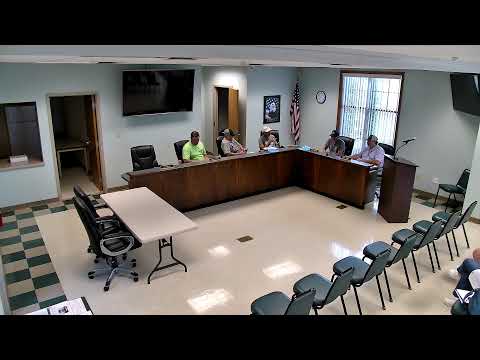
Trustees at the Morgan Township zoning meeting on July 1 reviewed draft zoning language for data centers, bridges and telecommunications and agreed to staggered, topic-by-topic reviews over coming months. Barry, a township staff member, presented a packet of revisions and said he had run the drafts through an AI model trained on the township’s prior resolutions to surface inconsistencies and suggest edits.
Why it matters: Trustees said the data-center draft raises life‑safety and infrastructure questions—especially about water use, megawatt limits and whether companies could force costly grid upgrades on taxpayers. The group discussed adding registration and renewal requirements for telecom and data-center permits, requiring proof of fire-department inspections on renewal, and using bonding and landscaping to limit long-term maintenance liabilities.
Barry told trustees, "I trained a model that knows our resolutions backward and forward," and said the AI output was built from the township’s existing language rather than an outside template. The draft synopsis already includes a daily water cap, a hard megawatt cap, a prohibition on taxpayer-funded grid upgrades and provisions for bonding and cleanup.
Trustees focused on where to locate data-center rules in the code: the draft references an M2 district that does not currently exist. Several trustees recommended either creating a rezoning path or applying the rules to M1 parcels; the transcript records a consensus to verify local zoning maps before settling placement and to avoid writing rules that apply to a non-existent district.
On power and backup systems, trustees debated whether to require companies to provide their own power or allow grid upgrades funded privately; they also discussed potential environmental effects if operators use large on‑site generators or lithium‑ion battery banks. Trustees agreed those decisions require clearer language and coordination with the fire department and county utilities.
Telecommunications and permit renewals drew support for periodic registration or re-certification so the township can track changes in ownership. Trustees discussed a one- to five-year renewal cadence, with a likely practical window of two to three years, and suggested tying renewals to evidence of a current fire-department inspection.
The draft also contains compliance tools: quarterly noise monitoring to capture low-frequency vibration, bonding requirements, and aesthetic/landscaping standards to screen visible infrastructure. Trustees asked staff to expand sections that mirror the township’s solar‑farm regulations—specifically cleanup, bonding and transfer-of-ownership obligations.
Next steps: Trustees scheduled focused reviews by topic: bridges in August, telecommunications in September and data centers in October to allow more time for research and public input. Staff will revise drafts to remove references to nonexistent zoning districts or to propose rezoning paths, and will consult with the fire department and county permitting authorities on inspection and safety language.
What’s next procedurally: The board did not adopt any ordinance at the July 1 meeting. The schedules established at the meeting are directional assignments for staff and trustees to return with tuned language at the planned meetings.