Get Full Government Meeting Transcripts, Videos, & Alerts Forever!
Get email alerts on the Elections topic
No spam. Unsubscribe anytime.
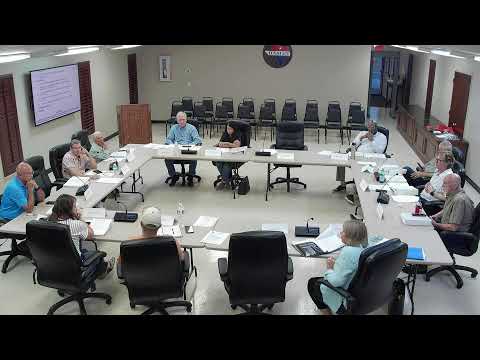
Haslet charter commission debates hybrid district plan for city elections
Summary
Commissioners spent the bulk of the July 1 meeting debating whether to shift from at‑large elections to a hybrid model of three single‑member districts plus three at‑large seats and a voting mayor, weighing representation benefits against redistricting and candidate‑pool concerns.
The Haslet Charter Commission on July 1 advanced a detailed discussion of how municipal elections would be conducted under a draft home‑rule charter, including a hybrid option that couples single‑member districts with at‑large council seats.
The commission’s election subcommittee presented a pros‑and‑cons memo and a sample map showing one way to divide the city into three districts while keeping three at‑large council seats and a voting mayor. The subcommittee’s presenter said the hybrid “would give us flexibility” and help introduce districts without making an abrupt change to the city’s current at‑large system.
Why it matters: Commissioners said districts could give neighborhoods a dedicated advocate on the council and boost perceived local representation in rapidly growing parts of the city. Supporters argued a district representative could “get to know” local problems such as traffic or industrial concerns and then lobby at‑large members for support.
Opponents raised practical and legal concerns. Members warned that districts can force earlier redistricting than expected, shrink the candidate pool for each seat and produce unintended vote concentration if several at‑large winners happen to come from one area. One commissioner urged caution about relying solely on rooftop counts and suggested measuring registered voters or assessed value when balancing districts.
Details debated: Presenters described an example configuration — three districts plus three at‑large seats — and that districts would be drawn for near‑equal population and contiguity. Commissioners discussed adding triggers (annexation or population thresholds) that would prompt a review or creation of additional districts; La Mesa and other small cities were cited as local comparisons. They also discussed staggering terms, whether to use two‑ or three‑year council terms, and whether the charter should include term limits.
Quotes and exchanges: When asked how to “sell” districts to residents, one presenter said, “I don’t know who my guy is,” arguing that districts create an identifiable local official residents can call. Opponents cautioned that districts could complicate recruitment: Ron warned a smaller geographic pool may mean fewer candidates, while others said that concentrating campaigning might actually encourage neighborhood candidates to run.
Next steps: The commission did not adopt structural language at the meeting; instead members asked the election subcommittee to refine the draft, specify how population or voter registries will be used in apportionment and prepare materials for a public town hall so residents can weigh in.
Ending: Commissioners agreed to present the refined proposals for public feedback at upcoming town‑hall events as part of the charter outreach plan.