Get Full Government Meeting Transcripts, Videos, & Alerts Forever!
Get email alerts on the Planning Policy topic
No spam. Unsubscribe anytime.
Commission urges city to hire urban master‑planning consultant to update Haslet master land use plan
Summary
After extensive public comment and a staff map presentation June 30, Haslet's Planning & Zoning Commission voted to recommend City Council contract with an urban master‑planning consultant to study retail placement, industrial/residential buffers and thoroughfare planning for the master land use plan update.
The Haslet Planning and Zoning Commission on June 30 voted to recommend that City Council engage an urban master‑planning consultant to update the city’s master land use plan and evaluate where retail, commercial and industrial uses should be located as Haslet grows.
The decision followed a staff presentation that reviewed current zoning and the existing master land use plan. Staff said there are roughly 488 acres zoned agricultural in the study area and noted that the master land use plan currently shows about 535 acres designated for commercial uses. Staff also highlighted planning constraints: a floodplain that separates industrial uses to the north from office/employment and residential transition areas to the south, and airport development limits and FAA noise‑disposition rules that restrict residential and people‑intensive uses within certain airport zones.
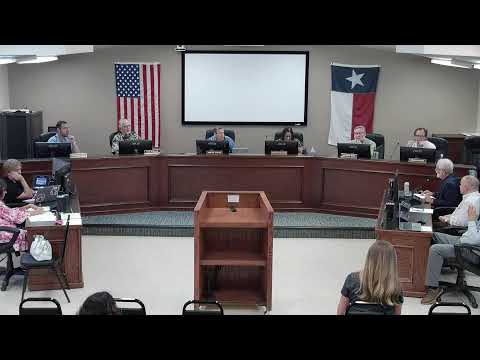
Several residents and stakeholders spoke during the workshop. Collins Meyer, a Fort Worth–based listing broker who represents multiple Fort Worth‑owned FAA noise‑abatement parcels inside Haslet city limits, told the commission many of those FAA‑restricted parcels are most compatible with industrial uses and that FAA disposition rules often require whole‑parcel sales (no subdivision). "The highest and best use for the majority of these properties is generally industrial," Meyer said, urging commissioners to concentrate retail frontage on parcels that front Haslet Parkway rather than Westport Parkway.
Other speakers — residents and board members — urged the commission to prioritize retail and neighborhood‑serving commercial uses along targeted corridors to increase sales tax revenue and preserve quality of life. Commissioners and staff discussed map legibility, traffic counts, the effect of future bridges and thoroughfare alignments on commercial feasibility, and the role of planned developments to protect neighborhood compatibility.
After discussion the commission moved, seconded and passed a recommendation asking council to contract with an urban planning consultant to analyze retail placement, compatibility among industrial/residential/retail uses, and the thoroughfare plan. Commissioners suggested the consultant's work should include public engagement and traffic/market feasibility analysis and that the commission review consultant findings before any recommendation is forwarded to council.
Clarification provided later in the meeting: staff and Mr. Kadesh said the short‑bridge design is roughly 30% complete and awaiting a contract with Kimley Horn; NCTCOG has identified promised funding sources for the short bridge though finalization is pending. Staff added that if the CRIS grant for the long bridge is awarded this fall construction could begin as early as April 2029 with an anticipated opening in 2032.