Get Full Government Meeting Transcripts, Videos, & Alerts Forever!
Get email alerts on the Land Use Development topic
No spam. Unsubscribe anytime.
Residents from Solen Township tell Cedar Springs council they were kept in the dark about proposed data center
Summary
Multiple residents told the Cedar Springs City Council on March 19 that they learned late of a proposed hyperscale data center ("Project Peninsula") and raised concerns about water use, noise, and lack of transparency; council heard requests for better notice and answers from township officials.
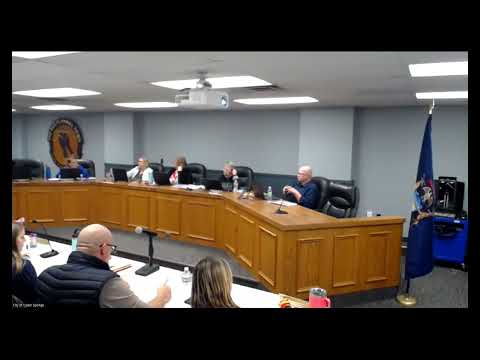
Several residents from nearby Solen Township used the council’s public comment period to urge Cedar Springs officials to explain how a large data center proposal advanced without public notice. At the March 19 special meeting, a resident who said she moved to the area to retire said the proposed facility, located two miles from her home, would be a “gigantic monstrosity” and that her family would consider moving if it is built.
Sarah Biggins, who identified herself as a Solen resident, asked why the city manager appeared to have spoken or acted for Solen Township before the township supervisor had formally signed off, saying, “a lot of us are in the dark and we want to know why.” She asked the council to clarify the process by which the project moved forward and which officials had authority to represent township interests.
Another speaker, Cara (who provided a timeline sourced to public records and local reporting), said documents show Project Peninsula was under discussion as early as Oct. 4, 2024, and summarized claims she said FOIA records and reporting revealed: a proposed site of about 650 acres, a total project cost she estimated at $1 billion, seven years of construction, potential daily water use she described as "two to six million gallons," and an electrical demand that would require a substantial new agreement with the regional utility to accommodate roughly 1 gigawatt of power. Cara framed those figures as reasons the proposal would change the community’s character and said residents were not adequately informed during planning.
Council members did not take action during the public comment period; under council policy, staff will refer concerns to the city manager for follow-up and, if unresolved, the matter would be elevated to the mayor and council. No staff or council member provided technical confirmation of the project details during the meeting. The claims made by residents were presented as their understanding from FOIA documents and reporting and were not independently verified during the session.
Next steps noted by the council were procedural: public comments will be forwarded to the city manager for investigation and the council may address intergovernmental representation questions in subsequent meetings.