Get Full Government Meeting Transcripts, Videos, & Alerts Forever!
Get email alerts on the Pool Safety topic
No spam. Unsubscribe anytime.
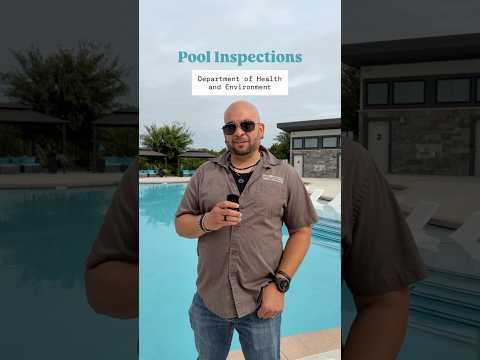
Johnson County environmental health specialist outlines pool‑safety checks
Summary
Kevin Ball, an environmental health specialist with the Johnson County Department of Health and Environment, described routine pool inspections—highlighting self‑closing, self‑latching doors, emergency 911 signage with facility name and address, life‑saving equipment and disinfectant testing across more than 700 aquatic venues.
Kevin Ball, an environmental health specialist with the Johnson County Department of Health and Environment, described what inspectors look for during routine pool inspections and emphasized steps to keep children and swimmers safe.
Ball said the county's aquatics program covers more than 700 aquatic venues and about 110 pools, spas and splash pads. "I'm Kevin Ball. I'm an environmental health specialist with Johnson County Department of Health and Environment and I'm the main contact for a lot of the pool inspections and aquatic work that we do here at the county," he said.
Among the items Ball said inspectors check are self‑closing, self‑latching doors on pool enclosures to prevent children from leaving the pool area. He also said "every aquatic facility should have an emergency call 911 sign with the name and the address associated with the facility in case there's an emergency, whether you have a phone or not." He described that signage as highly encouraged at every facility so callers can give clear location information.
Ball described required life‑saving equipment inspectors expect to see, including a shepherd's crook for reaching struggling swimmers and a U.S. Coast Guard–approved flotation device with a rope to throw to a person in the water. "We also have a flotation device. It's U.S. Coast Guard approved with a rope," he said.
On water quality, Ball said inspectors check disinfectant residuals (chlorine) during pool inspections and demonstrated a reagent that turns red to indicate acceptable chlorine. He stated, "it only takes one part per million to keep away most of the diseases and germs that can get onto your body," presenting that concentration as the level county inspectors consider protective.
Ball framed these checks as measures for public protection and safety. He said the county inspects a wide range of facilities—from apartment and hotel pools to swim beaches and school recreational facilities—and uses these equipment and chemical checks to reduce the risk of drowning and waterborne illness.
Inspectors did not cite a specific ordinance or statute in the briefing; Ball presented these items as standard inspection practices used by the department.